
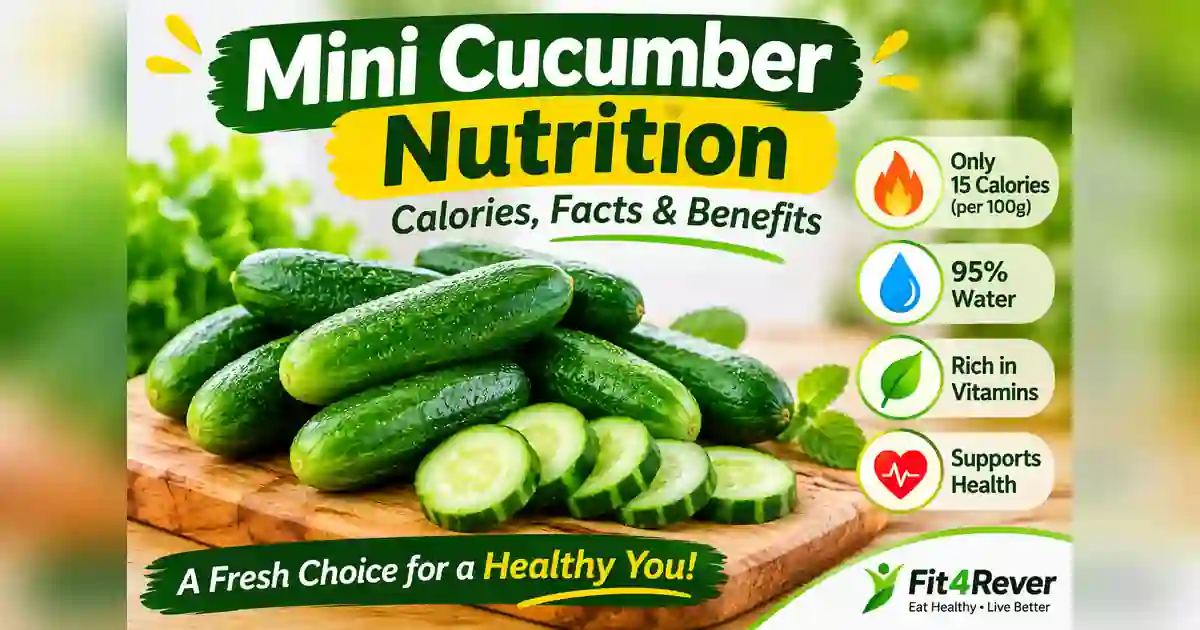
Mini cucumber nutrition is impressive for such a simple vegetable. Mini cucumbers are low-calorie vegetables that provide water, small amounts of fiber, and several essential nutrients. One mini cucumber, weighing about 85 grams, contains about 15 calories. They are a refreshing snack for people who want to enjoy crunchy vegetables while maintaining a balanced diet.
Key Takeaways
- Mini cucumber nutrition includes approximately 15 calories per 85-gram serving.
- Raw cucumbers contain around 95% water.
- A 100-gram serving provides approximately 15 calories and 3.63 grams of carbohydrates.
- Cucumbers contain small amounts of vitamin K, potassium, and vitamin C.
- Eating cucumbers with their skin can provide additional fiber and nutrients.
- Mini cucumbers are convenient for salads, lunchboxes, and low-calorie snacks.
- Pairing cucumbers with protein-rich foods can make snacks more satisfying.
Mini Cucumber Nutrition Facts
Understanding mini cucumber nutrition helps you make better food choices without complicated calorie calculations. Mini cucumber nutrition is quite similar to that of traditional slicing cucumbers when compared by weight.
The exact mini cucumber nutrition values depend on the cucumber variety, growing conditions, size, and preparation method. For practical purposes, standard raw cucumber nutrition data provides a useful estimate.
Mini Cucumber Nutrition Facts per 100 g
The following table shows approximate nutrition values for raw cucumber with peel.
| Nutrient | Amount per 100 g |
|---|---|
| Calories | 15 kcal |
| Water | 95.2 g |
| Carbohydrates | 3.63 g |
| Total sugars | 1.67 g |
| Dietary fiber | 0.5 g |
| Protein | 0.65 g |
| Total fat | 0.11 g |
| Potassium | 147 mg |
| Vitamin C | 2.8 mg |
| Vitamin K | 16.4 mcg |
These mini cucumber nutrition values are based on standard USDA cucumber data. They should be treated as estimates for mini cucumbers rather than exact laboratory results for every variety.
1 Mini Cucumber Nutrition Facts
A mini cucumber weighing approximately 85 grams provides the following estimated mini cucumber nutrition:
| Nutrient | Approximate amount |
|---|---|
| Calories | 13–15 kcal |
| Carbohydrates | 3.1 g |
| Fiber | 0.4 g |
| Protein | 0.6 g |
| Fat | 0.1 g |
| Water | 81 g |
Some retail nutrition labels list one mini cucumber weighing about 85 grams as containing 15 calories, 3 grams of carbohydrates, and 1 gram of protein.
Always check the product label for exact mini cucumber nutrition information if you need precise serving data.
Mini Cucumber Nutrition Data by Serving Size
Serving size makes a big difference in mini cucumber nutrition when calculating calories. A small cucumber may contain fewer calories than a larger one, even when both are sold as mini cucumbers.
| Serving size | Approximate calories |
|---|---|
| 50 g | 8 kcal |
| 85 g | 13 kcal |
| 100 g | 15 kcal |
| 150 g | 23 kcal |
| 200 g | 30 kcal |
These values are calculated using approximately 15 calories per 100 grams.
For accurate calorie tracking, weigh your cucumber before entering it into a food diary. This is especially helpful when following a specific calorie target.
Are Mini Cucumbers Healthy?
Yes, mini cucumber nutrition makes them a healthy addition to most balanced diets. They provide water, small amounts of fiber, and several micronutrients while containing very few calories.
Their main nutritional advantage is their combination of hydration, freshness, and convenience. They are easy to prepare and can help increase vegetable intake without adding many calories.
1. Mini Cucumbers Support Hydration
Cucumbers contain approximately 95% water. Eating water-rich foods contributes to your daily fluid intake and can help support normal hydration.
Mini cucumbers are especially refreshing during warm weather. Their high water content makes them a practical addition to lunchboxes, salads, and light snacks.
However, eating cucumbers does not replace drinking water. Your hydration needs depend on factors such as activity level, climate, and individual health.
2. They Provide Vitamin K
Vitamin K plays an important role in normal blood clotting and bone health.
Raw cucumber with peel contains vitamin K, although the amount in one mini cucumber is relatively modest. Including cucumbers alongside other vegetables can contribute to a varied nutrient intake.
People taking warfarin or other vitamin K-sensitive anticoagulant treatment should follow their healthcare professional’s advice about maintaining consistent vitamin K intake.
3. They Contain Small Amounts of Fiber
Mini cucumbers provide a small amount of dietary fiber. Fiber supports normal digestive function and contributes to a healthy eating pattern.
Cucumbers are not a high-fiber vegetable, so they should not be your only source of fiber.
For a more fiber-rich meal, combine cucumbers with beans, lentils, whole grains, or other vegetables.
4. They Are Naturally Low in Fat
Raw cucumbers contain very little fat. This makes them a convenient ingredient in meals where you want to add freshness and crunch without significantly increasing the fat content.
Their nutritional profile also makes them easy to combine with foods containing healthy fats, such as olive oil, avocado, or nuts.
Mini Cucumbers for Weight Loss
Mini cucumber nutrition can fit into a weight-loss eating plan because they are low in calories and contain a high amount of water.
However, they are not a fat-burning food. Eating cucumbers alone will not cause weight loss, and no single vegetable can replace a balanced approach to nutrition.
Weight management depends on your overall calorie intake, physical activity, sleep, and long-term eating habits.
Why Mini Cucumbers Can Help with Calorie Control
Mini cucumbers add volume and crunch to meals while contributing relatively few calories.
For example, the mini cucumber nutrition in 200 grams of raw cucumber is approximately 30 calories. You can use this portion alongside a balanced meal or as part of a snack.
Their mild flavor also makes them easy to combine with other foods without requiring high-calorie sauces.
Healthy Mini Cucumber Snack Ideas
Try these simple combinations:
- Mini cucumbers with plain Greek yogurt dip
- Cucumber slices with hummus
- Mini cucumbers with cottage cheese
- Cucumber rounds with boiled eggs
- Cucumber salad with tomatoes and lemon juice
These combinations provide more nutritional variety than eating cucumbers alone.
Nutrition tip: If you feel hungry soon after eating cucumbers, add protein or healthy fats. A snack containing only vegetables may not provide enough energy or protein to keep you satisfied for long.
Mini Cucumbers vs. Regular Cucumbers
Mini cucumber nutrition and regular cucumber nutrition are similar when compared by weight.
The main differences are their size, texture, seed structure, and convenience. Mini cucumbers are often easier to pack for snacks, while regular cucumbers are convenient for slicing into larger salads.
| Feature | Mini cucumbers | Regular cucumbers |
|---|---|---|
| Calories per 100g | About 15 kcal | About 15 kcal |
| Water content | Very high | Very high |
| Size | Small | Usually longer |
| Seeds | Often smaller | May be more noticeable |
| Best use | Snacking and dipping | Salads and sandwiches |
| Nutrition | Similar per gram | Similar per gram |
Mini cucumbers are not automatically more nutritious because they are smaller. Their nutritional value depends on the amount eaten and the specific variety.
How to Eat Mini Cucumbers
Mini cucumbers are versatile vegetables that require very little preparation. You can enjoy them whole, sliced, or combined with other ingredients.
Eat Them Fresh
Wash cucumbers under clean running water before eating them.
You can eat them whole or cut them into slices. Keeping the skin on helps preserve mini cucumber nutrition, including the fiber and nutrients found in the peel.
Add Them to Salads
Slice mini cucumbers and combine them with tomatoes, leafy greens, onions, and lemon juice.
This creates a refreshing salad that adds vegetables and crunch to your meal.
You can also add chickpeas, grilled chicken, or boiled eggs to increase the protein content.
Pair Them with Protein
Cucumbers work well with protein-rich foods such as
- Greek yogurt
- Cottage cheese
- Boiled eggs
- Tuna
- Hummus
These combinations can help make a snack more balanced and satisfying.
Use Them as a Crunchy Alternative
Cucumber slices can replace some crackers or chips when serving dips.
For example, use mini cucumbers to scoop up hummus or yogurt-based dips. This can reduce the calorie content of your snack, depending on the dip and portion size.
Can You Eat Mini Cucumbers Every Day?
Most people can enjoy mini cucumbers daily as part of a varied diet.
They are naturally low in calories and can help increase vegetable intake. However, eating only cucumbers or relying on them as a major source of nutrition would not provide enough energy, protein, or essential fats.
A balanced diet should include different vegetables, fruits, whole grains, protein sources, and healthy fats.
Are Mini Cucumbers Safe for Everyone?
Mini cucumbers are generally safe for most people when washed and stored properly.
Some individuals may experience digestive discomfort after eating cucumbers, particularly if they are sensitive to certain foods. In rare cases, cucumber may trigger an allergic reaction.
If you experience persistent symptoms after eating cucumbers, speak with a healthcare professional.
How to Store Mini Cucumbers
Proper storage helps preserve the freshness, texture, and quality of mini cucumbers.
Keep them refrigerated and avoid storing them while excessively wet. Moisture on the surface can contribute to spoilage.
Wash cucumbers shortly before eating rather than washing them immediately before long-term storage.
Discard cucumbers that become slimy, moldy, or develop an unpleasant smell.
For the best texture, eat mini cucumbers while they are firm and crisp.
Mini Cucumber Nutrition and Fit4Rever
Healthy eating does not need to be complicated. Mini cucumbers are a simple example of how everyday foods can contribute to a balanced diet.
Understanding serving sizes, calories, and nutrient content can help you make more informed choices without following restrictive diets or unrealistic food rules.
For additional nutrition and wellness guidance, visit Fit4Rever.
Fit4Rever provides health, fitness, and nutrition resources designed to help readers understand their options and develop practical habits. You can explore its nutrition articles, fitness guides, and health calculators to support your wellness journey.
The goal is not to depend on one particular food. Instead, build a sustainable eating pattern that includes a variety of nutritious foods and fits your lifestyle.
Final Thoughts
Mini cucumbers are refreshing, convenient, and naturally low in calories. They provide water, small amounts of fiber, and several micronutrients that contribute to a balanced diet.
A mini cucumber weighing approximately 85 grams contains around 13–15 calories, while 100 grams of raw cucumber provides about 15 calories.
The most useful way to understand mini cucumber nutrition is to consider both serving size and overall dietary balance. Enjoy mini cucumbers in salads, snacks, or meals alongside protein-rich foods and other vegetables.
They are not a miracle weight-loss food, but they are a practical and nutritious choice for everyday eating.
Frequently Asked Questions
1. How many calories are in one mini cucumber?
One mini cucumber weighing approximately 85 grams contains around 13–15 calories. The exact amount depends on its size and variety. Larger mini cucumbers may contain more calories than smaller ones, even when both are sold in the same package.
2. What are the mini cucumber nutrition facts per 100g?
Mini cucumber nutrition facts per 100 grams are approximately 15 calories, 3.63 grams of carbohydrates, 0.65 grams of protein, 0.11 grams of fat, and 0.5 grams of fiber. These values are based on standard raw cucumber data.
3. Are mini cucumbers good for weight loss?
Mini cucumbers can support a weight-loss eating plan because they are low in calories and contain a high amount of water. However, they do not directly burn fat. Weight loss depends on maintaining a consistent calorie deficit through balanced eating and physical activity.
4. Are mini cucumbers healthier than regular cucumbers?
Mini cucumbers are not necessarily healthier than regular cucumbers. Their nutritional values are generally similar when compared by weight. Mini cucumbers may be more convenient for snacking, while regular cucumbers are often easier to use in larger salads and meals.
5. Do mini cucumbers contain carbohydrates?
Yes. Mini cucumbers contain naturally occurring carbohydrates, including small amounts of sugar and dietary fiber. A 100-gram serving of raw cucumber provides approximately 3.63 grams of carbohydrates, making it a relatively low-carbohydrate vegetable.
6. Should you eat mini cucumbers with the skin?
Eating mini cucumbers with the skin is generally a good choice. The peel contributes fiber and nutrients, including vitamin K. Wash cucumbers thoroughly under clean running water before eating them, especially when consuming the skin.
7. Can you eat mini cucumbers every day?
Most people can enjoy mini cucumbers daily as part of a varied diet. They are a low-calorie vegetable that contributes water and small amounts of nutrients. People with specific dietary restrictions or medical conditions should follow advice from their healthcare professional.
8. Are mini cucumbers good for hydration?
Mini cucumbers can contribute to hydration because they contain approximately 95% water. Eating them can help increase your fluid intake, but they should complement—not replace—regular water consumption, particularly during hot weather or exercise.
Sources
- USDA FoodData Central: https://fdc.nal.usda.gov/
- Rank Math Keyword Density Guide: https://rankmath.com/seo-glossary/keyword-density/
- Rank Math Focus Keyword Guide: https://rankmath.com/kb/what-is-a-focus-keyword/
- H-E-B Mini Seedless Cucumbers Nutrition Label: https://www.heb.com/product-detail/h-e-b-fresh-mini-seedless-cucumbers/4915012
