
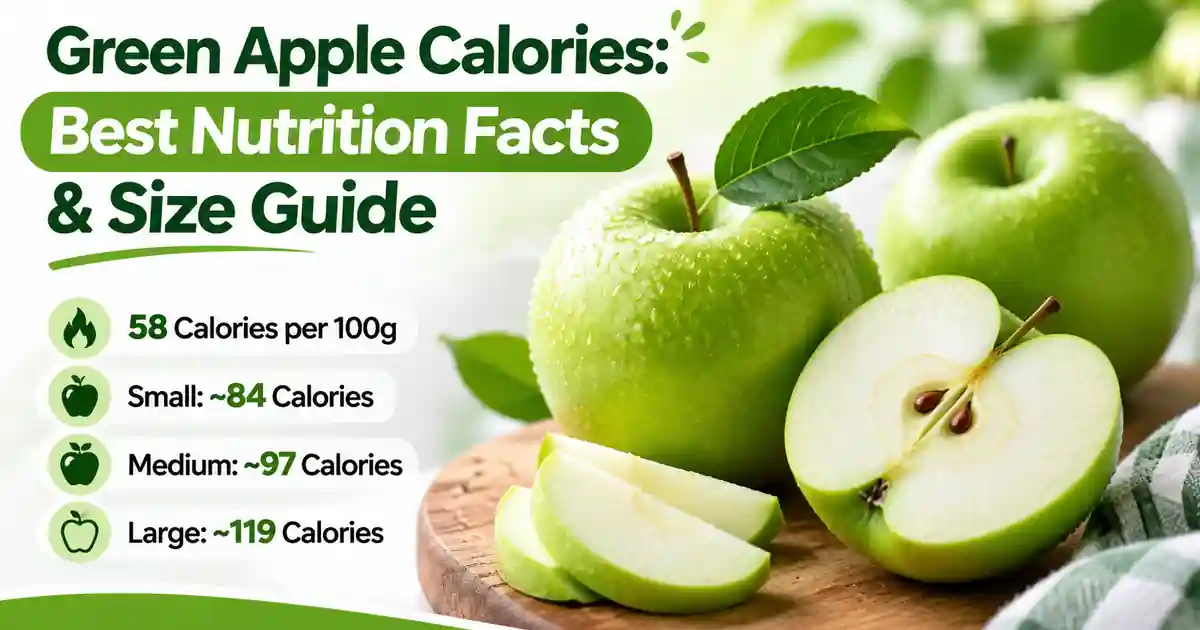
Green apple calories vary with the fruit’s weight, but a useful estimate is 58 calories per 100 grams for a raw Granny Smith apple with the skin. A medium apple weighing about 167 grams provides around 97 calories. The figures below explain portions, nutrients, preparation, and drink comparisons.
Key Takeaways
- Raw Granny Smith apples with skin provide about 58 calories per 100 grams.
- A medium 167-gram apple has approximately 97 calories.
- A large 206-gram apple has around 119 calories.
- A small 144-gram apple is estimated at 84 calories.
- A medium apple supplies about 4.6 grams of fiber.
- Most apple calories come from carbohydrates.
- Whole apples can fit into a balanced eating plan.
- Smirnoff Ice Green Apple is an alcoholic drink, not fresh fruit.
How Many Calories Are in a Green Apple?
The quickest way to estimate the energy in an apple is to check its edible weight. USDA Standard Reference Data lists raw Granny Smith apples with skin at 58 calories per 100 grams. The database also lists 97 calories for a medium 167-gram apple and 119 calories for a large 206-gram apple.
Green apple calories are not fixed for every piece of fruit. A small apple can weigh much less than a large one, and two apples that look similar may still have different edible weights.
The core and stem are not eaten, so a kitchen scale gives the clearest estimate. If you do not have a scale, use the size estimates as a guide rather than treating them as exact laboratory measurements.
Green Apple Calories by Size
The table uses the USDA energy value of 58 calories per 100 grams. The small serving is an estimate based on a 144-gram edible portion. The medium and large weights match the USDA common measures for Granny Smith apples.
| Serving | Approximate edible weight | Estimated calories |
|---|---|---|
| Small | 144 g | 84 kcal |
| Medium | 167 g | 97 kcal |
| Large | 206 g | 119 kcal |
| 100 g | 100 g | 58 kcal |
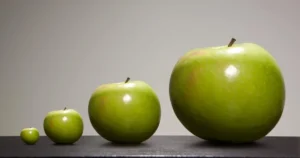
A serving may fall between these sizes. For example, a 180-gram apple would provide about 104 calories using the same reference value.
To estimate another portion, divide its weight in grams by 100 and multiply the result by 58. This simple calculation is useful when logging fruit in a food diary or nutrition app.
Small Green Apple Calories
A small green apple weighing about 144 grams has approximately 84 calories. It can be a handy snack when you want a modest serving of fruit.
The number is an estimate because small apples are not sold to one universal weight standard. Check the edible portion if you need a closer figure for meal tracking.
Small green apple calories may be lower or higher depending on the apple’s actual size. A fruit weighing 120 grams would provide about 70 calories, while one weighing 150 grams would provide about 87 calories. This is why weight is more reliable than a label such as small, medium, or large.
Medium Green Apple Calories
A medium Granny Smith apple weighs about 167 grams in the USDA reference and contains approximately 97 calories. It also provides around 22.7 grams of carbohydrates, 4.6 grams of dietary fiber, and 0.74 grams of protein. These values make a medium apple a simple portion to record in a food diary.
Medium green apple calories are often the most useful figure for people who eat one whole apple as a snack. Still, the word medium can mean different things. If the apple is noticeably heavier or lighter than 167 grams, adjust the estimate rather than relying on the size label alone.
Large Green Apple Calories
A large Granny Smith apple weighs approximately 206 grams and provides about 119 calories. Its larger portion also supplies more carbohydrates, natural sugar, and fiber than a smaller apple. This simply means the portion contributes more energy to the day’s total.
Large Green Apple Calories can be estimated by weighing the edible fruit and applying the 58-calorie-per-100-gram reference. A 220-gram apple, for example, would contain about 128 calories. The difference between a large and medium apple is not enormous, but it may matter when you track portions consistently.
1 Green Apple Calories: How Much Does One Provide?
The phrase “1 green apple calories does not describe one exact amount because apples vary in size. One medium fruit is a practical reference at about 97 calories, while a small one may provide around 84 and a large one around 119. Weighing the edible portion is the best way to improve accuracy.
People also ask about the number of green apple calories when entering food into an app. Choose a matching size entry if you do not know the weight. If the app offers a gram-based option, enter the edible weight instead. Avoid adding the core or stem to the amount you record because those parts are usually discarded.
Green Apple Calories 100 g: Full Nutrition Facts
Green apple calories are easier to compare per 100 grams because the serving weight stays the same. USDA Standard Reference data for raw Granny Smith apples with skin reports 58 calories, 13.61 grams of carbohydrates, 2.8 grams of dietary fiber, 9.59 grams of total sugars, 0.44 grams of protein, and 0.19 grams of fat per 100 grams.
| Nutrient | Amount per 100 g |
|---|---|
| Energy | 58 kcal |
| Carbohydrates | 13.61 g |
| Dietary fiber | 2.8 g |
| Total sugars | 9.59 g |
| Protein | 0.44 g |
| Total fat | 0.19 g |
| Potassium | 120 mg |
| Calcium | 5 mg |
| Iron | 0.15 mg |
When comparing entries, check whether the database describes raw fruit with the peel, peeled fruit, or a cooked preparation. Those forms can have different water levels and nutrition values.
A dried apple, sweetened apple sauce, or packaged fruit snack is not equal to a fresh Granny Smith apple. Match the food description to what you actually eat, and keep the serving unit consistent when you log it.
These are reference values, not a promise that every apple will have identical nutrition. Variety, growing conditions, ripeness, storage, and laboratory methods can affect the numbers. The USDA record is a useful standard for planning, but a specific apple may differ slightly.
Carbohydrates in Green Apples
Carbohydrates are the main source of energy in a green apple. The 100-gram reference serving contains 13.61 grams. This total includes naturally occurring sugars and dietary fiber.
Green apple calories mostly come from carbohydrates, one of the body’s main energy sources found in many nutritious foods.
When comparing food labels, remember that total carbohydrate already includes fiber. Do not add the fiber number to the carbohydrate number as if it were a separate extra. If you count net carbohydrates, follow the method recommended for your own dietary needs and use consistent data.
Natural Sugar in Green Apples
For green apple calories, the USDA reference lists about 9.59 grams of total sugar per 100 grams. This sugar is naturally present in the fruit rather than added during processing. A medium apple provides roughly 16 grams when the 100-gram value is scaled to its 167-gram weight.
The presence of natural sugar does not mean an apple is the same as a sweetened drink or candy. Whole fruit also contains water, fiber, and other nutrients. If you monitor carbohydrate intake for a medical reason, include the apple in your overall meal plan and follow advice from your qualified healthcare professional.
Fiber and Protein
Dietary fiber is one of the useful features of whole apples. A 100-gram portion provides about 2.8 grams, while a medium apple provides approximately 4.6 grams. Fiber supports normal digestion and contributes to a balanced eating pattern. When logging Green Apple Calories, remember that the washed skin provides fiber.
Apples are not a high-protein food. A medium Granny Smith apple provides about 0.74 grams of protein, so it should not be treated as a replacement for protein-rich foods. Pair it with plain yogurt, nuts, cottage cheese, or another suitable protein source if you want a more filling snack.

Are Green Apples Good for Weight Management?
Green apples can fit into a weight-management plan because they provide a defined portion of energy along with water and fiber. A medium apple has about 97 calories, which can make it an easy snack to include in a daily food budget. Green apple calories matter less than how the whole day’s meals and activity fit together.
No apple variety burns body fat by itself. Weight change is influenced by long-term energy balance, eating habits, activity, sleep, health conditions, and other factors. Choosing fruit instead of a more energy-dense snack may help some people reduce overall intake, but results depend on the complete pattern rather than one food.
Green Apple vs. Red Apple: Which Has Fewer Calories?
Green and red apples have very similar calorie values. In the USDA Standard Reference, raw Granny Smith apples with skin provide 58 calories per 100 grams, while raw Red Delicious apples provide 59 calories per 100 grams. A one-calorie difference per 100 grams is too small to make one type a meaningful weight-loss choice over the other.
| Per 100 g | Granny Smith | Red Delicious |
|---|---|---|
| Calories | 58 kcal | 59 kcal |
| Carbohydrates | 13.61 g | 14.06 g |
| Dietary fiber | 2.8 g | 2.3 g |
| Total sugars | 9.59 g | 10.48 g |
Green apple calories and red apple values can differ by variety, so treat this table as a comparison rather than a universal rule. Taste, texture, availability, and the portion you enjoy are more useful deciding factors than a one-calorie gap.
Smirnoff Ice Green Apple Calories: A Different Product
Smirnoff Ice Green Apple is a flavored alcoholic beverage, not a fresh apple or a fruit juice. Do not use fresh-fruit green apple calories to estimate this drink’s calories from alcohol and carbohydrates.
It should therefore be tracked separately from fresh fruit. Do not use apple nutrition data to estimate the calories in a bottled alcoholic drink.
Smirnoff Ice green apple calories depend on the exact product, alcohol percentage, bottle size, and market. A German retail listing for a 10% ABV, 250 ml bottle reports 99 calories per 100 ml and 248 calories per bottle. Product recipes and labels can vary by country, so check the packaging of the bottle you have.
How to Check the Calories in Your Bottle
Check the nutritional information printed on the bottle or can.
Look for:
Energy per 100 ml.
Total bottle volume.
Alcohol percentage.
Multiply the calories per 100 ml by the bottle volume divided by 100 to estimate the calories in the complete bottle.
Important: Alcoholic beverages are not nutritional substitutes for fresh fruit. Always check the product label because formulations and serving sizes differ.
Track Your Daily Calories With Fit4rEver
Understanding the calories in individual foods is a useful first step, but your overall daily intake matters when working toward a fitness goal.
Fit4rEver provides free health and fitness calculators to help you understand your daily calorie requirements.
Its Calorie Intake Calculator can help estimate how many calories you need to lose weight, maintain your current weight, or support muscle gain.
You can enter your age, height, weight, activity level, and fitness goal to receive an estimated daily calorie target and macronutrient breakdown.
You can also explore its other tools for calculating BMI, BMR, TDEE, protein requirements, and body fat percentage.
Visit Fit4rEver to explore its free health and fitness resources.
Final Thoughts
Green apples are portable, easy to portion, and useful in snacks or meals. USDA Standard Reference data lists 58 calories per 100 grams for raw Granny Smith apple with skin. A medium 167-gram apple has about 97 calories, while a large 206-gram apple provides around 119.
Weigh the edible portion for the closest estimate whenever possible. Size-based figures are useful guides, but natural fruit varies. Whole apples can fit into many eating patterns; no single fruit determines weight loss or overall health. Choose portions that suit your needs and enjoy a varied diet.
Frequently Asked Questions
1. How many calories are in one medium green apple?
One medium Granny Smith apple weighing about 167 grams contains approximately 97 calories. This estimate is based on the USDA value of 58 calories per 100 grams. A heavier or lighter apple will provide a different amount, so weighing it improves accuracy.
2. How many calories are in a small green apple?
A small apple weighing around 144 grams provides approximately 84 calories using the same reference value. The term small is not a fixed weight category, so the actual amount can vary. For a more precise food log, weigh the edible portion.
3. How many calories are in a large green apple?
A large Granny Smith apple weighing approximately 206 grams contains around 119 calories. Larger fruit also provides more carbohydrates, natural sugars, and fiber than smaller fruit. Use the actual weight when you need a more accurate estimate.
4. How many calories are in 100 grams of green apple?
One hundred grams of raw Granny Smith apple with skin contains about 58 calories in the USDA Standard Reference data. It also provides approximately 13.61 grams of carbohydrates, 2.8 grams of dietary fiber, and 9.59 grams of total sugars.
5. Are green apples good for weight loss?
Green apples can fit into a weight-management plan because they provide a portion of fruit with water and fiber. However, they do not burn fat or cause weight loss by themselves. Overall food intake, activity, sleep, and long-term habits matter.
6. Do green apples contain a lot of sugar?
A 100-gram serving contains about 9.59 grams of naturally occurring sugar in the USDA reference. A medium apple provides roughly 16 grams. Whole apples also contain water and fiber, so they are different from drinks with added sugar.
7. Are green apples healthier than red apples?
Neither color is automatically healthier. USDA reference values show 58 calories per 100 grams for Granny Smith and 59 for Red Delicious apples. Both varieties can fit into a balanced diet. Choose based on taste, availability, and personal preference.
8. How many calories are in Smirnoff Ice Green Apple?
The calorie count depends on the bottle and alcohol percentage. A German listing for a 10% ABV, 250 ml version reports 99 calories per 100 ml and 248 calories per bottle. Always check the nutrition label on your own product.
Research and editorial sources
The article uses the following sources for its nutrition figures and brand information:
