
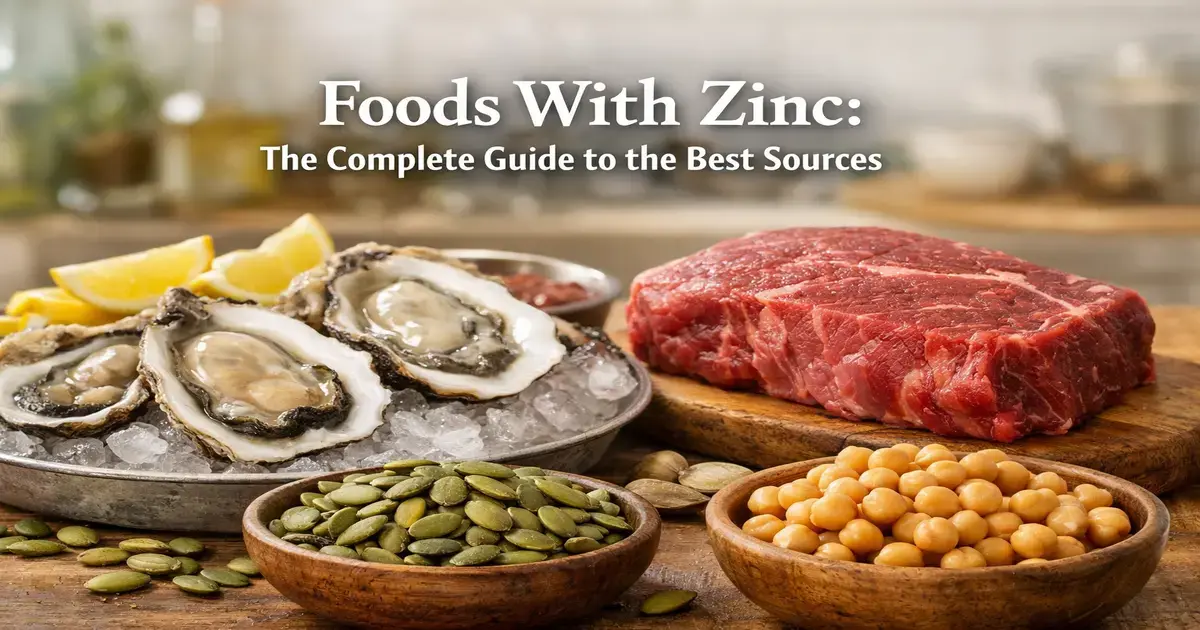
Foods with zinc include oysters, beef, pumpkin seeds, hemp seeds, cashews, chickpeas, eggs, and oats. Oysters have the most zinc by weight, but pumpkin seeds and red meat are easier to eat regularly. Adult men need about 11 mg of zinc daily, and adult women need about 8 mg.
Key Takeaways
- Oysters are the richest of all foods with zinc, followed by red meat and seeds.
- Pumpkin and hemp seeds are the strongest plant-based foods with zinc you can buy in most grocery stores.
- Vegetarians can meet their needs with legumes, tofu, nuts, and whole grains, though plant zinc is absorbed less easily.
- Fruit contributes very little, so most people should rely on seeds, meat, and legumes instead.
- Hair loss, slow healing, and frequent infections can signal low zinc, and a doctor can confirm it with a test.
- Whole foods with zinc are the safest route for most adults, and supplements belong under medical guidance.
Why Zinc Matters for Your Body
Zinc is an essential trace mineral that your body uses in more than 300 enzymes. It supports immune defense, DNA and protein synthesis, wound healing, normal growth during childhood and pregnancy, and your sense of taste and smell.
Because the body stores only small reserves, you need a steady supply from meals. That is why building a habit around foods with zinc matters more than eating a large portion once in a while.
Athletes and active adults have extra reasons to pay attention. Training creates microscopic muscle damage that must be repaired, and the immune system works harder during heavy training blocks.
Zinc is involved in both processes. A diet that regularly includes foods with zinc gives your body the raw material it needs to recover well, without relying on expensive supplements or specialty products.
Zinc also shows why nutrition works best as a pattern rather than a single ingredient. Your body balances zinc against copper, iron, and calcium, and how well you absorb it depends on what else is on your plate.
A large portion of beef followed by a cup of tea with a meal, for example, may reduce absorption compared with the same meal without the tea. The goal is not to chase one perfect food but to spread zinc-rich choices across the week so your body gets a dependable supply.
Foods With Zinc: Content Chart
The chart below lists approximate zinc content per 100 grams for common foods. Brand, species, cooking method, and even the age of an ingredient can change the numbers, so treat these figures as useful estimates rather than laboratory results.
Comparing items side by side makes it easier to spot which foods with zinc give you the most value for the money and the least effort in the kitchen.
| Food (per 100 g) | Approximate Zinc (mg) |
|---|---|
| Oysters, cooked | 40 to 80 |
| Hemp seeds | about 10 |
| Pumpkin seeds, roasted | about 7 to 8 |
| Beef chuck, cooked | 5 to 7 |
| Cashews, roasted | about 5.5 to 6 |
| Oats, dry | about 4 |
| Cheddar cheese | 3 to 4 |
| Dark chocolate (70 to 85%) | about 3.3 |
| Chicken thigh, cooked | 2.5 to 3 |
| Tofu, firm | 1.5 to 2.5 |
| Chickpeas, cooked | about 1.5 |
| Shrimp, cooked | about 1.5 |
| Lentils, cooked | about 1.3 |
| Eggs, whole | about 1.3 |
| Milk | about 0.4 |
Oysters top the list, but most people will not eat them often. For everyday meals, beef, seeds, and cashews do more of the work, and they are among the most practical foods with zinc for busy households.
Notice too that the middle of the chart is filled with ordinary staples. A varied plate usually includes several of these at once, and that combination matters more than any single entry.
Animal Sources
Animal foods deliver zinc in a form your body absorbs efficiently. Red meat, poultry, and shellfish are the most reliable options.
Chicken thigh contains more zinc than breast meat because dark meat holds more of the mineral. Crab and lobster provide useful amounts as well, and they make a welcome change for anyone who wants variety.
Among animal foods with zinc, beef is the easiest to fit into regular dinners, since it works in stews, stir-fries, and simple grilled plates.
Plant Sources
Plant foods also contain zinc, but phytates in grains, beans, and seeds can block part of it from being absorbed. Soaking, sprouting, or fermenting legumes and grains reduces those compounds and helps you absorb more.
Pumpkin seeds, hemp seeds, and cashews are the most concentrated plant options, and they fit easily into salads, oatmeal, yogurt bowls, or a snack bag.
These plant-based foods with zinc are especially valuable for anyone reducing animal products, and combining several of them across the day can make a real difference.
Everyday Staples
Oats, eggs, dairy, and dark chocolate each add a modest amount of zinc. None is a powerhouse alone, but together they close small gaps in your intake.
Some fortified breakfast cereals add zinc as well, so it is worth checking the nutrition label. Using everyday staples alongside richer foods with zinc makes your total easier to reach without special shopping trips or unusual ingredients.
Foods With Zinc for Vegetarians
Vegetarians can absolutely get enough zinc. The most useful options are pumpkin seeds, hemp seeds, cashews, lentils, chickpeas, tofu, tempeh, and whole grains.
If you eat eggs or dairy, they add to the total without much extra effort. A good weekly plan includes several of these foods with zinc at different meals rather than relying on one ingredient to carry the load.
Because plant zinc is absorbed less efficiently than zinc from meat, it helps to eat larger portions and to prepare legumes and grains properly.
Soaking beans overnight and sprouting lentils before cooking can both improve how much zinc you take in. Vegans in particular benefit from planning their week, and a registered dietitian can review your intake and suggest adjustments.
Many people find that a simple checklist, with one or two zinc-rich items added to every main meal, keeps things on track without much thought.
Tip: Sprinkle a spoonful of pumpkin seeds over breakfast, lunch, or soup. It is one of the simplest ways to add foods with zinc to meals you already enjoy, and it takes only seconds.
Fruits and Vegetables: Are Any Zinc-Rich?
Fruit is a weak source of zinc. Avocado and blackberries contain small amounts, and guava provides a bit more, but none come close to meat, seeds, or shellfish.
Many people search for which fruit is zinc-rich, and the honest answer is that fruit will not meet your needs on its own. If you want a fruit that contributes something useful, avocado is the best pick because it also brings healthy fats and fiber that support nutrient absorption in general.
Vegetables do somewhat better. Green peas, mushrooms, kale, and spinach contain zinc, though the amounts are modest.
Think of produce as support for a meal built around protein-rich foods with zinc, rather than as the main source. A plate that combines lentils, roasted vegetables, and a handful of seeds gives you far more zinc than a plate of salad alone, even if the salad looks more impressive.
Zinc in Eggs and Oats
A large egg has roughly 0.6 mg of zinc, mostly concentrated in the yolk. Eggs also provide high-quality protein, which makes them a strong breakfast choice.
They pair well with other foods with zinc, such as whole-grain toast, sautéed mushrooms, or a side of chickpeas.
Dry oats contain several milligrams per 100 grams, which is a meaningful amount for a grain. A bowl of oats topped with pumpkin seeds or chopped cashews turns into a filling, zinc-supporting start to the day.
Oats are also inexpensive, store well, and cook quickly, so they are one of the easiest staples to rely on for consistent intake.
Foods With Zinc for Skin Health
Zinc supports skin repair, helps regulate oil production, and plays a role in how the body responds to inflammation. Shellfish, beef, pumpkin seeds, and eggs all supply it.
Zinc alone will not clear acne or dryness, and anyone with persistent skin problems should see a dermatologist. However, a shortfall can make rashes and slow healing more likely, so including foods with zinc consistently is a sensible way to support skin from the inside.
Pairing zinc sources with vitamin C foods such as citrus, bell peppers, and berries can also help. Vitamin C supports collagen formation, which is central to skin structure.
A varied diet with enough protein tends to benefit skin more than any single nutrient, so think of zinc as one reliable part of a broader pattern rather than a miracle ingredient.
Signs of Low Zinc
Low zinc is uncommon among people who eat a varied diet, but it does happen.
Common signs include hair loss, slow wound healing, frequent infections, reduced taste or smell, skin rashes, diarrhea, and poor appetite. In children, low zinc can slow growth and development.
Anyone who notices these changes should review their diet for enough foods with zinc and should also get checked by a doctor, since many conditions cause similar symptoms.
Symptoms to Notice
Thinning hair, altered taste, and repeated colds are often the first signs people spot. Rashes around the mouth or on the hands can also appear, and wounds may take longer than usual to close.
These symptoms overlap with many other conditions, including thyroid problems and anemia, so they do not confirm a zinc problem on their own. Keeping a simple record of when symptoms appear can help your doctor narrow things down.
Who Is More Likely to Be Low
Some people need more zinc or absorb it less effectively. That includes pregnant and breastfeeding women, older adults, people with Crohn’s disease or celiac disease, heavy drinkers, and vegans who are not planning their meals.
Certain medications, including some diuretics and drugs used to treat chronic conditions, can also lower zinc levels. This is why a review of your medicines is part of any proper assessment.
When to See a Doctor
If symptoms persist for more than a few weeks, or if they are getting worse, book an appointment. A doctor can order a blood test and recommend a plan that fits your situation.
Do not guess and start high-dose zinc on your own, because more is not always better. Targeted treatment works best when it is based on measured results rather than assumptions.
Alert: Taking more than 40 mg of zinc daily from all sources can lower copper levels and weaken immune function. Speak with a healthcare professional before starting any high-dose supplement, even if you already eat plenty of foods with zinc.
Zinc Supplements Versus Food
For most people, food is the better route. Whole foods deliver other nutrients that work alongside zinc, such as protein, fiber, and vitamins, and they do not carry the same risk of excess.
Supplements can help someone with a confirmed deficiency, but they should be guided by a clinician who knows your history.
Choosing foods with zinc first keeps your approach balanced and lowers the chance of taking in more than your body needs.
Zinc can also interfere with certain antibiotics, including some quinolones and tetracyclines, so timing matters.
If you take either type of medicine, ask your pharmacist how far apart to take zinc supplements. This small step prevents one product from reducing the effect of the other.
Foods That Pair Well With Zinc
Many foods with zinc also supply other key nutrients, which makes them efficient choices. Pumpkin seeds and almonds bring magnesium, as do spinach and black beans.
Red meat, lentils, and fortified cereals provide iron, which is absorbed better when eaten alongside vitamin C. Fatty fish, egg yolks, and fortified milk supply vitamin D, which supports bone and immune health.
A lentil and spinach bowl with bell peppers shows how these pairings work in practice. It covers zinc, iron, magnesium, and vitamin C in one dish, and it is inexpensive to prepare in batches.
Meals like this make it easier to build consistent habits without counting every milligram.
Final Thoughts
Oysters and beef lead on zinc content, but pumpkin seeds, hemp seeds, cashews, chickpeas, eggs, and oats are the foods most people will realistically eat on a regular basis.
Vegetarians can meet their needs with thoughtful planning, and fruit should not be relied on for zinc.
Building meals around foods with zinc across the week is a simple and sustainable approach that supports immunity, recovery, and skin health. If you suspect a shortfall, speak with a healthcare provider before considering supplements.
Where Fit4rever Fits In
Zinc is one part of eating well for an active life, alongside training, sleep, and recovery. Fit4rever.com describes itself as a resource for fitness, nutrition, and wellness tips, which makes it a useful place to read more about meals that support your routine.
Explore practical guidance at https://fit4rever.com/ and use it to plan how foods with zinc fit into your week, from quick breakfasts to balanced dinners.
Frequently Asked Questions About Foods With Zinc
What food is highest in zinc?
Oysters contain the most zinc by weight, often 40 to 80 mg per 100 grams when cooked. Among foods with zinc that people eat regularly, hemp seeds, pumpkin seeds, and beef rank highest, which makes them practical choices for meeting daily needs without special effort.
What are signs of low zinc?
Hair loss, slow wound healing, frequent infections, reduced taste or smell, and skin rashes are among the most common signs. Diarrhea and loss of appetite can also occur.
Because these symptoms have many possible causes, a doctor should confirm them with a blood test before you make major dietary changes.
Which fruit is zinc-rich?
No fruit is truly zinc-rich. Avocado and blackberries contain small amounts, and guava offers a little more.
For meaningful zinc intake, seeds, legumes, nuts, and meat provide far more than fruit does, so treat fruit as a complement to other foods with zinc rather than a primary source.
Are zinc-rich foods good for vegetarians?
Yes. Pumpkin seeds, hemp seeds, cashews, lentils, chickpeas, tofu, and whole grains all contribute. Plant zinc is absorbed less efficiently than animal zinc, so larger portions and proper soaking or sprouting help. Including several foods with zinc at each meal gives the most reliable results.
How much zinc do I need daily?
Adult men need about 11 mg per day and adult women about 8 mg. Pregnant women need about 11 mg, and breastfeeding women need about 12 mg.
A varied diet with protein and seeds usually covers these amounts without special products or extra planning.
Can I get too much zinc from food?
Food alone rarely pushes intake past safe limits. The greater risk comes from high-dose supplements, which can cause nausea, copper deficiency, and weaker immune function.
The adult upper limit is 40 mg per day from all sources combined, so track supplements carefully if you take them.
Do eggs and oats contain zinc?
Yes. A large egg has roughly 0.6 mg, mostly in the yolk, and dry oats provide several milligrams per 100 grams. Both are inexpensive, easy everyday additions that help build your total intake over the course of the week.
