
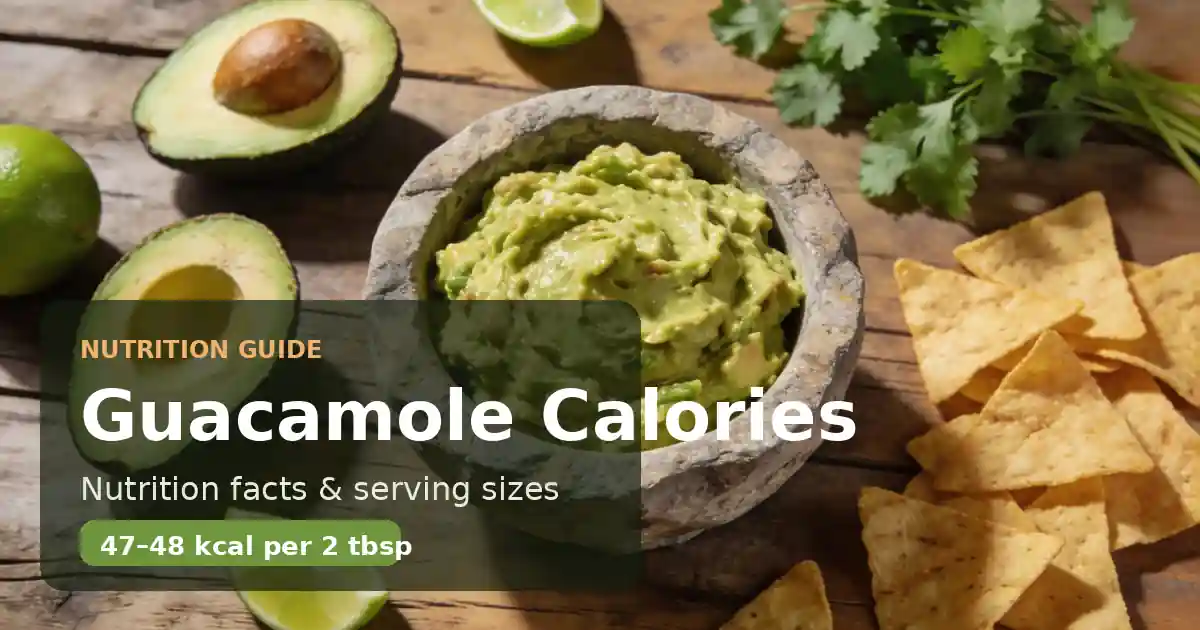
Guacamole contains about 155–160 calories per 100 grams, depending on its ingredients and how it’s prepared. A 2-tablespoon serving provides around 47–48 calories. Most of its calories come from avocados, which also provide fiber, potassium, and heart-friendly unsaturated fats.
Key Takeaways
- Calories per tablespoon: Approximately 23–24 calories.
- Calories per 100 grams: Around 155–160 calories.
- Main ingredient: Avocado provides most of the calories and fat.
- Nutritional value: Guacamole contains fiber, potassium, and vitamins.
- Chipotle serving: A standard 4-ounce portion contains approximately 230 calories.
- Weight management: Moderate portions can fit into a balanced weight-loss diet.
- Homemade option: Fresh ingredients make it easier to control calories, sodium, and added fats.
How Many Calories in Guacamole?
The number of calories in guacamole depends on its serving size and ingredients. Traditional guacamole contains mashed avocado, lime juice, tomatoes, onions, cilantro, and seasonings. Avocado contributes most of the calories because it contains natural fats.
For people tracking their daily food intake, understanding portion sizes is more useful than avoiding this dip altogether. A small serving can add flavor and nutrients without adding as many calories as a large restaurant portion.
Guacamole Calories by Serving Size
Here is an estimated breakdown of calories in different portions:
| Serving size | Approximate calories |
|---|---|
| 1 teaspoon (5 g) | 8 kcal |
| 1 tablespoon (15 g) | 23–24 kcal |
| 2 tablespoons (30 g) | 47–48 kcal |
| ¼ cup (60 g) | 93–96 kcal |
| ½ cup (120 g) | 186–192 kcal |
| 100 grams | 155–160 kcal |
| 1 cup (240 g) | 372–384 kcal |
These are estimates based on generic guacamole nutrition values. Actual figures vary by recipe and serving weight.
How Many Calories in Two Tablespoons of Guacamole?
Two tablespoons contain approximately 47–48 calories when the combined serving weighs 30 grams. This is a practical amount for sandwiches, salads, tacos, and vegetable snacks.
However, a heaped tablespoon may contain more than 15 grams. If you are following a calorie-controlled diet, measuring your portion with a kitchen scale can give you a more accurate estimate.
Why Does Serving Size Matter?
Avocados are nutritious, but they are also relatively calorie-dense compared with many vegetables. Eating a larger amount increases your total energy intake even when the ingredients are fresh and minimally processed.
For example, adding two tablespoons to a sandwich is different from eating half a cup alongside tortilla chips. Both portions can fit into a balanced diet, but their calorie contributions are not the same.
Guacamole Nutrition Facts: Fat, Carbs, and Protein
Guacamole provides several nutrients because its main ingredient is avocado. Its nutritional composition includes fats, carbohydrates, fiber, and small amounts of protein.
The following table provides approximate values for a 100-gram serving.
| Nutrient | Approximate amount |
|---|---|
| Calories | 155–160 kcal |
| Total fat | 14 g |
| Saturated fat | 2 g |
| Carbohydrates | 8–9 g |
| Dietary fiber | 6–7 g |
| Protein | 2 g |
| Sugar | Less than 1 g |
| Potassium | 450–470 mg |
Values are rounded estimates. Different recipes and commercial products may have different nutritional profiles.
1. Healthy Fats
Most of the fat in avocado comes from monounsaturated fatty acids, including oleic acid. These fats can form part of a heart-conscious eating pattern, particularly when they replace foods high in saturated fats.
However, healthy fats still contain calories. Eating larger portions can increase your daily energy intake, so portion awareness remains important.
2. Dietary Fiber
Fiber is another important nutrient in guacamole. A 100-gram serving generally provides around 6–7 grams of dietary fiber.
Fiber supports normal digestion and helps maintain regular bowel movements. It can also contribute to fullness when included in balanced meals.
3. Carbohydrates and Protein
Traditional guacamole contains relatively few carbohydrates compared with many processed dips. Most of its carbohydrates come from avocado and vegetables such as tomatoes and onions.
It is not a high-protein food, providing approximately 2 grams per 100 grams. Pairing it with eggs, chicken, beans, or other protein sources can make a more balanced meal.
4. Vitamins and Minerals
Avocados contain several essential nutrients that contribute to the nutritional value of guacamole.
These include:
- Potassium: Supports normal muscle and nerve function.
- Vitamin K: Helps with normal blood clotting.
- Vitamin E: Provides antioxidant protection.
- Folate: Supports normal cell growth and division.
- Vitamin C: Contributes to normal immune function.
The exact amounts depend on the avocado quantity and other ingredients in the recipe.
Chipotle Guacamole Calories: How Much Does It Contain?
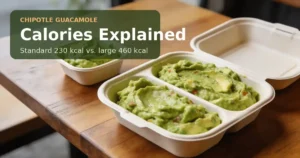
Restaurant portions can be considerably larger than homemade servings. This is particularly important when comparing guacamole calories at different restaurants.
According to Chipotle’s published US nutrition information, its standard guacamole portion contains approximately 230 calories, while its large portion contains 460 calories.
| Chipotle portion | Weight | Calories |
|---|---|---|
| Standard guacamole | 4 oz (113 g) | 230 kcal |
| Large guacamole | 8 oz (227 g) | 460 kcal |
Check Chipotle’s current nutrition information for the latest serving sizes and values.
What About Chipotle Chips and Guacamole Calories?
The tortilla chips contribute additional calories, making the complete snack considerably more energy-dense than the dip alone.
Chipotle’s published US nutrition information lists approximately:
- Regular chips and guacamole: 770 calories.
- Large chips and guacamole: 1,270 calories.
These figures represent the complete combinations, not just the guacamole.
If you want to enjoy this restaurant snack while monitoring your food intake, consider sharing the chips or choosing fresh vegetables as an alternative.
Is Guacamole Good for Weight Loss?
Yes, guacamole can be included in a weight-loss diet. Its nutritional value makes it a useful addition to meals, but eating it does not automatically lead to weight loss.
Your overall calorie intake compared with the energy your body uses is the main factor in weight management. Therefore, the amount you eat matters just as much as the ingredients.
How Guacamole Can Support a Balanced Diet
Fiber for fullness: Dietary fiber contributes to digestive health and can help meals feel more satisfying.
Unsaturated fats: Avocados provide fats that can replace some saturated-fat sources in your eating pattern.
Meal variety: Guacamole adds flavor and creamy texture to vegetables, salads, and protein-rich foods.
Nutrient intake: It contributes potassium, vitamin E, folate, and other nutrients.
How Much Should You Eat?
There is no universal serving size for everyone. Your portion should fit your daily calorie requirements and the rest of your meal.
For a practical starting point, try two tablespoons with lunch or dinner. This provides approximately 47–48 calories.
You can adjust the serving according to your nutritional needs, activity level, and personal goals.
Weight-loss tip: Avoid overlooking tortilla chips, cheese, and creamy sauces when calculating your complete meal. These additions can contribute more calories than expected.
What Ingredients Affect Guacamole Calories?
Traditional recipes use a few simple ingredients, but some variations include additional fats and dairy products. These changes can affect the final calorie count.
Avocado
Avocado is the main calorie source. Using more avocado increases the energy content of the complete recipe.
Olive Oil
Some recipes include olive oil for a smoother texture. Although it contains unsaturated fats, it is calorie-dense and increases the total energy content.
Sour Cream and Cheese
Sour cream, cream cheese, and shredded cheese create richer variations. They also add calories, fat, and sometimes sodium.
Tomatoes, Onions, and Lime Juice
These ingredients add flavor, freshness, and texture. Their calorie contribution is generally smaller than that of avocado and added oils.
Salt and Seasonings
Salt increases sodium intake but does not significantly affect calories. Cilantro, black pepper, cumin, and chili powder can add flavor without contributing many calories in normal quantities.
Easy Homemade Guacamole Recipe
Making guacamole at home allows you to control the ingredients and serving sizes. You can prepare a fresh dip in a few minutes using ingredients commonly available in grocery stores.
Ingredients
- 2 medium ripe avocados.
- ¼ cup chopped tomatoes.
- 2 tablespoons chopped red onion.
- 1 tablespoon lime juice.
- 1 tablespoon fresh cilantro.
- A small amount of salt.
- Black pepper to taste.
Preparation
- Cut the avocados in half and remove the pits.
- Scoop the flesh into a mixing bowl.
- Mash with a fork until you reach your preferred consistency.
- Add tomatoes, onions, lime juice, and cilantro.
- Mix everything until evenly combined.
- Add salt and black pepper according to your preference.
- Serve immediately or refrigerate in an airtight container.
How to Calculate Homemade Guacamole Calories
The most accurate method is to calculate the calories of each ingredient using its weight and nutrition information.
Add the calories from all ingredients to find the total recipe value. Then divide that number by the number of equal servings.
For example, if your recipe contains 600 calories and makes six equal servings, each serving provides approximately 100 calories.
This approach is more reliable than assuming every homemade recipe has the same nutritional value.
Homemade vs. Store-Bought Guacamole
Both homemade and packaged guacamole can be nutritious. The better option depends on ingredients, preparation, freshness, and convenience.
| Feature | Homemade | Store-bought |
|---|---|---|
| Ingredient control | High | Depends on brand |
| Portion control | Easy | Check serving label |
| Sodium control | Adjustable | Varies by product |
| Preparation | Requires time | Ready to serve |
| Added ingredients | Your choice | Check ingredient list |
Homemade versions make it easier to control salt and additional fats. Packaged products are convenient, but checking their nutrition labels helps you compare serving sizes and ingredients.
Neither option is automatically healthier. Focus on the actual nutritional information rather than the product category.
How to Enjoy Guacamole Calories Without Adding Too Many Calories
You can enjoy guacamole while maintaining a balanced eating pattern. The key is to consider what you eat with it and how much you serve.
Here are some practical combinations:
- Cucumber and carrots: Fresh vegetables provide crunch without adding many calories.
- Grilled chicken: Adds protein and makes a more substantial meal.
- Boiled eggs: Provide protein and other essential nutrients.
- Whole-grain toast: Creates a convenient breakfast or snack.
- Bean bowls: Combine fiber, protein, and vegetables with a moderate amount of guacamole.
- Fresh salads: Use it as a topping instead of adding several creamy dressings.
If you regularly track your food intake, measure your portions rather than estimating them by eye.
How Fit4rEver Can Help With Your Nutrition Goals
Understanding the calories in individual foods is only one part of managing your health. Your daily calorie requirements and macronutrient intake also matter.
Fit4rEver provides health and fitness calculators that help readers understand their nutritional requirements and make informed decisions.
You can explore these tools:
- Calorie Intake Calculator – Estimate your daily calorie requirements for weight loss, maintenance, or weight gain.
- Macro Calculator – Estimate your daily protein, carbohydrate, and fat requirements.
These tools can help you plan balanced meals while including foods such as guacamole in appropriate portions.
Final Thoughts
Guacamole is a nutritious avocado-based dip that provides unsaturated fats, dietary fiber, potassium, and several vitamins. A two-tablespoon serving contains approximately 47–48 calories, while 100 grams provides around 155–160 calories.
You do not need to avoid it when managing your weight. Focus on sensible portions, fresh ingredients, and balanced meals. Checking restaurant nutrition information and measuring homemade servings can also help you understand your daily food intake.
Frequently Asked Questions About Guacamole Calories
1. How many calories in guacamole per tablespoon?
One tablespoon of guacamole, weighing approximately 15 grams, contains around 23–24 calories. The exact amount depends on the recipe, avocado quantity, and additional ingredients such as olive oil or sour cream.
2. How many calories are in two tablespoons of guacamole?
Two tablespoons provide approximately 47–48 calories when the serving weighs around 30 grams. This is a convenient portion for sandwiches, salads, vegetable snacks, and other balanced meals.
3. How many calories in guacamole per 100 grams?
A 100-gram serving of generic guacamole contains approximately 155–160 calories. Most of its calories come from avocado fat. Different recipes and commercial products may have different nutritional values.
4. How many calories are in Chipotle guacamole?
A standard US Chipotle guacamole serving contains approximately 230 calories for four ounces. Its large eight-ounce portion contains around 460 calories. These figures refer to the dip alone, excluding tortilla chips.
5. Is guacamole good for weight loss?
Yes, moderate portions can fit into a weight-loss diet. Guacamole provides fiber and unsaturated fats, but it still contributes calories. Consider your overall food intake and daily energy requirements when choosing your serving size.
6. Is guacamole high in carbohydrates?
Traditional guacamole contains approximately 8–9 grams of total carbohydrates per 100 grams, including dietary fiber. Its carbohydrate content is relatively modest compared with many processed dips, making it suitable for several lower-carbohydrate eating patterns.
7. Is homemade guacamole healthier than store-bought?
Homemade guacamole gives you greater control over ingredients, salt, and added fats. Store-bought versions can also be nutritious, but their nutritional composition varies. Comparing ingredient lists and nutrition labels helps you make a suitable choice.
8. Can I eat guacamole every day?
Most people can include moderate portions of guacamole in their regular eating pattern. It provides useful nutrients, but portion size and overall dietary balance still matter. Individual medical dietary restrictions should also be considered.
