
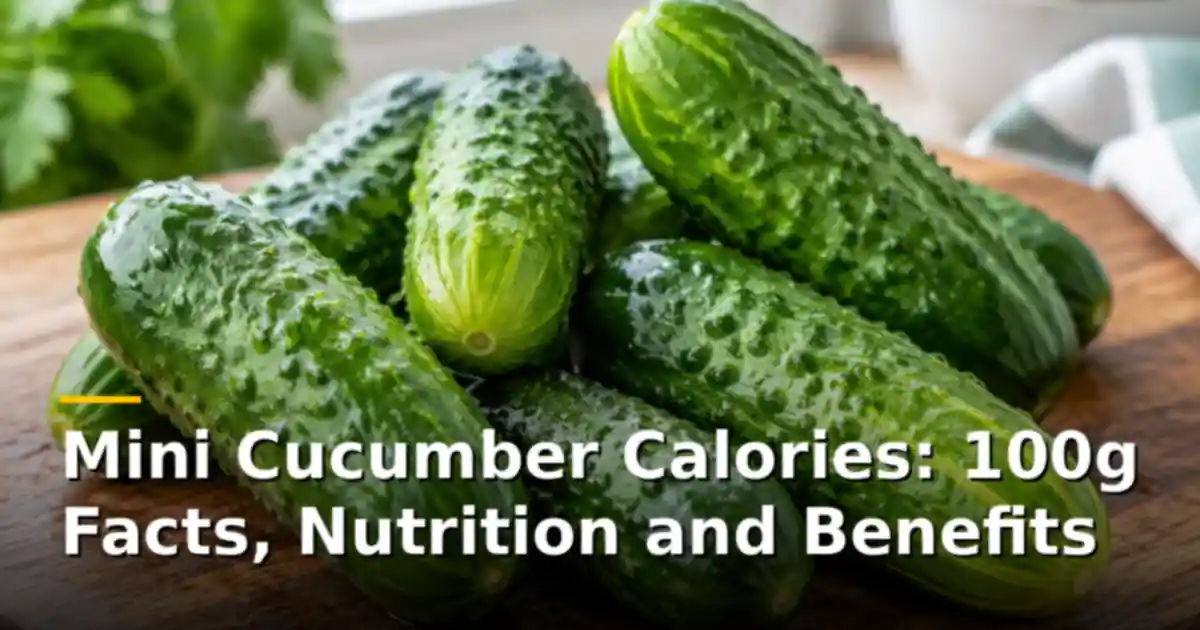
Mini cucumber calories total about 15 per 100 grams, so a typical mini cucumber weighing 60 grams contains roughly 9 calories. Because cucumbers are about 95 percent water, their energy content stays very low. Peeling changes the count only slightly, and the skin adds fiber and vitamin K.
Key Takeaways
- One mini cucumber has roughly 9 calories on average, though the exact figure depends on its weight.
- Mini cucumber calories are about 15 per 100 g, which places them among the lowest-calorie foods you can eat.
- Calories with and without the peel are nearly identical, but keeping the skin on preserves fiber and vitamin K.
- Mini cucumber protein is minimal, so pair it with eggs, yogurt, or legumes for a more balanced snack.
- Mini cucumber benefits include hydration, fiber, and potassium, and their nutrition closely matches regular cucumbers.
- Mini cucumber calories are far lower than apple calories and banana calories, so they add volume and crunch without much energy.
How Many Calories Are in 1 Mini Cucumber?
A single mini cucumber usually weighs between 50 and 70 grams, so its calorie count falls within a narrow range. Because mini cucumber calories are so low, even a generous handful adds very little to your daily total. That makes them a practical choice for anyone counting calories, managing portions, or looking for a filling snack.
The most accurate way to estimate the number is to weigh your cucumber rather than count it. Two mini cucumbers of the same variety can differ noticeably in size, and a larger one may weigh 75 grams or more. Using the 15-calorie-per-100-gram benchmark, you can calculate mini cucumber calories for any weight quickly.
Calories by Weight
At roughly 15 calories per 100 grams, a 50-gram mini cucumber provides about 8 calories, while a 70-gram one provides about 10. This formula works for any portion. If you weigh 120 grams of cucumber, you can expect about 18 calories, which is still modest for a substantial serving of fresh vegetable.
Mini Cucumber Calories With Peel
The calories in a mini cucumber with peel remain close to 15 per 100 grams. The peel contains a small amount of fiber, vitamin K, and plant compounds, but it adds almost no energy.
Eating the whole cucumber gives you the most nutrition for the fewest calories. Many people also find the thin skin of mini varieties less bitter and easier to chew than the thicker skin of larger cucumbers.
Mini Cucumber Calories Without Peel
If you prefer to peel your cucumbers, two mini cucumbers without peel typically total around 15 to 18 calories, depending on size.
Peeling removes a little fiber and some nutrients, but the difference in mini cucumber calories is negligible. The decision usually comes down to texture and personal preference rather than energy intake.
Calories in 3 Mini Cucumbers
Three mini cucumbers weighing about 60 grams each total roughly 180 grams, which comes to about 27 calories.
That is a useful reference when you are building a salad, packing lunch, or preparing a snack platter for several people.
Because the calorie cost is so low, you can add generous amounts of cucumber to meals without changing your overall energy balance.
Tip: Eating mini cucumbers before a meal adds volume to your plate. Because they are mostly water and fiber, they can help you feel fuller with fewer calories, which may support portion control at lunch or dinner.
Mini Cucumber Nutrition Facts per 100 g
The table below shows approximate values for raw mini cucumber with peel per 100 grams. These figures come from standard reference data for raw cucumber with skin, and actual values vary slightly by variety, growing conditions, and ripeness.
Mini cucumber nutrition facts per 100 g work well as a baseline, but they should be treated as estimates rather than exact measurements.
| Nutrient | Amount per 100 g |
|---|---|
| Calories | About 15 kcal |
| Water | About 95 to 96 g |
| Carbohydrates | About 3.6 g |
| Dietary fiber | About 0.5 g |
| Sugars | About 1.7 g |
| Protein | About 0.65 g |
| Fat | About 0.1 g |
| Vitamin K | About 16 mcg |
| Potassium | About 147 mg |
These numbers explain why mini cucumber calories stay so low. Nearly the entire weight of the vegetable is water, and the remaining solids are mostly carbohydrates, with very small amounts of protein and fat. The energy is spread across natural sugars and fiber, which is why the food feels light yet still contributes a little to daily nutrition.
Mini Cucumber Protein Content
Mini cucumber protein is extremely limited. Every 100 grams contains only about 0.65 grams, so a single mini cucumber provides less than half a gram.
This is typical for vegetables in the cucurbit family, which are valued for hydration and micronutrients rather than protein. If you want more protein, mini cucumbers can still support meals that include eggs, cottage cheese, chicken, tofu, or lentils by adding crunch and volume.
Carbohydrates and Sugars
Mini cucumbers contain about 3.6 grams of carbohydrates per 100 grams, and most of that is naturally occurring sugar and fiber.
The sugar content is modest, which makes mini cucumbers a suitable choice for people monitoring blood sugar. Because they contain very little starch, they produce only a small effect on blood glucose compared with refined snacks, so the calorie load stays low.
Vitamins and Minerals
Mini cucumbers supply several micronutrients in useful amounts relative to their calorie count. Vitamin K is the most notable, with roughly 16 micrograms per 100 grams.
Potassium, at about 147 milligrams per 100 grams, supports normal muscle and nerve function. Smaller amounts of vitamin C, magnesium, and manganese are also present, and these add up when cucumbers are eaten regularly.
Note: Nutrient values in reference databases differ depending on whether the cucumber was measured with or without peel, and on the variety. Check the specific source you rely on, especially if you track nutrients for medical or dietary reasons.
Mini Cucumber Benefits
Mini cucumber benefits come mainly from high water content, modest fiber, and useful micronutrients, all delivered in an extremely low-calorie package.
They are not a treatment for any condition, but they fit well into a balanced eating pattern that emphasizes vegetables, whole foods, and adequate hydration.
Supports Hydration
With about 95 percent water, mini cucumbers help contribute to daily fluid intake. They are especially useful for people who find plain water unappealing, since the crisp texture and mild flavor make hydration feel more enjoyable.
Adding sliced mini cucumbers to water, salads, or yogurt bowls increases fluid intake without adding sugar or meaningful calories.
Supports Digestion and Fullness
Mini cucumbers contain a modest amount of dietary fiber, which supports regular digestion and contributes to fullness.
Because their water content adds bulk, they can help you feel satisfied with a smaller portion of food. Keeping the peel on increases the fiber in each serving, which is one reason many people eat mini cucumbers whole.
Provides Vitamin K and Potassium
Vitamin K plays a role in normal blood clotting and in maintaining healthy bones. Potassium supports muscle contraction, nerve signaling, and fluid balance.
Mini cucumbers provide both nutrients in small but meaningful amounts, and they deliver them with almost no fat or added sugar.
Supports Weight-Conscious Eating
Because mini cucumber calories are so low, they fit easily into eating plans built around volume and satiety.
Replacing a higher-calorie crunchy snack with sliced mini cucumbers can reduce energy intake without leaving you hungry, especially when paired with a little protein or healthy fat.
Warning: Mini cucumbers are generally safe for most people, but they should not replace a varied diet. If you have a digestive condition, kidney concerns, or a medical diet plan, speak with a doctor or registered dietitian before making significant changes.
Are Mini Cucumbers Just as Healthy as Regular Cucumbers?
Yes, mini cucumbers are nutritionally very similar to regular cucumbers. Both come from the same plant species and offer comparable levels of water, fiber, and vitamins per gram.
The differences are mostly practical. Mini cucumbers are smaller, have thinner skin, and contain fewer and smaller seeds, which many people find more pleasant to eat raw. Regular cucumbers are easier to slice into large portions and can be more economical for recipes that call for volume.
From a calorie standpoint, the two are essentially interchangeable. Per 100 grams, regular cucumber contains roughly the same energy as mini cucumber, so the choice depends on taste, texture, and how you plan to use them.
Many people find mini cucumbers sweeter and crisper, which is one reason they have become popular for snacking.
Sunset Mini Cucumber Calories
Sunset mini cucumbers are a popular variety that many shoppers encounter in grocery stores. Their calorie content per 100 grams is essentially the same as other cucumbers, at about 15 calories.
Because they are small and tender, a typical sunset mini cucumber falls in the same weight range as other mini varieties, so you can estimate its calories using the same method.
Choose sunset mini cucumbers for flavor and availability rather than assuming a different nutritional profile.
Taste and Texture Differences
Texture is where mini cucumbers stand out most. Their skin is thin and tender, and the flesh is dense with fewer large seeds.
That makes them well suited to salads, snack boxes, and cold dishes where a clean crunch matters. Regular cucumbers can be more watery and have thicker skin, which some people peel before slicing into rounds for sandwiches or pickling.
How Mini Cucumber Calories Compare to Common Foods
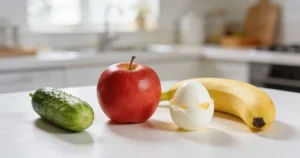
Putting mini cucumber calories in context makes everyday snack decisions easier. Many people are surprised by how little energy a cucumber contributes compared with fruit, eggs, and grain-based snacks. The table below compares a mini cucumber with several common foods using typical serving sizes, and the values are approximate.
| Food | Typical Serving | Approximate Calories |
|---|---|---|
| Mini cucumber | 1 cucumber (about 60 g) | 9 |
| Cucumber (regular) | 1 cup sliced (about 104 g) | 16 |
| Apple | 1 medium (about 182 g) | 95 |
| Banana | 1 medium (about 118 g) | 105 |
| Egg | 1 large (about 50 g) | 72 |
Apple Calories Compared With Mini Cucumber Calories
A medium apple contains about 95 calories, roughly ten times the energy of one mini cucumber. Apples provide natural sugars, fiber, and vitamin C, so they offer a different kind of nutrition.
If you want something sweet and substantial, an apple is the better choice. If you want something crisp and light, mini cucumber calories deliver far less energy for a similar sense of freshness.
Banana Calories Compared With Mini Cucumber Calories
A medium banana has about 105 calories and delivers far more carbohydrates and potassium than a cucumber. Bananas are energy-dense and work well as pre-workout fuel or a quick breakfast.
Mini cucumbers suit situations where you want hydration and volume without a large energy load. Many people combine the two on a snack plate, using banana for energy and cucumber for bulk.
Egg Calories Compared With Mini Cucumber Calories
A large egg contains about 72 calories, along with roughly 6 grams of protein and healthy fats. Eggs are a useful protein source, while mini cucumbers contribute almost none.
Pairing the two is popular because the egg provides satiety and the cucumber adds freshness and fiber. Egg calories are moderate, but they deliver far more protein per calorie than cucumber does.
Mini cucumbers work best as a low-calorie addition that adds crunch and volume rather than as a standalone energy source. Fruit, eggs, and grains each play their own role in a balanced diet, and cucumbers complement them well.
How Much Cucumber Is 20 Calories?
At about 15 calories per 100 grams, 20 calories of cucumber equals roughly 130 grams. That is a little more than a cup of sliced regular cucumber, or about two mini cucumbers depending on their size.
This estimate helps when you want to see how far a small calorie budget can stretch. A large salad built on cucumber costs about the same energy as a few bites of a snack bar.
Thinking in terms of calorie-to-volume ratios helps with planning. A cup of sliced cucumber provides a satisfying amount of crunch and water for only about 16 calories, which makes it one of the most efficient ways to add bulk to a meal. That principle explains why cucumbers appear so often in low-calorie salads, sandwiches, and side dishes.
Warning: Cucumber itself is extremely low in calories, but accompaniments can change the total dramatically. Creamy dressings, cheese, croutons, and dips can add far more energy than the cucumber they coat. Measure your dressing, not just your vegetables.
Tips for Using Mini Cucumbers in a Calorie-Conscious Diet
Keeping a bowl of washed mini cucumbers in the refrigerator makes them a convenient default snack when hunger hits between meals. Slicing them into rounds and pairing them with hummus, Greek yogurt dip, or a boiled egg creates a balanced snack that combines fiber, protein, and hydration.
Simple Snack Pairings
Mini cucumbers pair well with foods that add protein or healthy fat without a large calorie cost. Try them with cottage cheese, a spoonful of hummus, or a hard-boiled egg.
These combinations keep you full longer than cucumber alone, and the added protein offsets the very low protein content of the vegetable.
Making Cucumbers Part of Meals
You can also add mini cucumbers to lunch and dinner with little effort. Dice them into grain bowls, toss them into salads with tomatoes and herbs, or serve them beside grilled fish or chicken. Because they add crunch and freshness, they make a simple meal feel more complete while keeping the total calorie count modest.
Storage and Freshness
Mini cucumbers keep best in the refrigerator and should be used within a week of purchase. Keeping them dry and unwashed until you are ready to eat helps prevent spoilage. A cucumber that feels soft or shows yellowing is past its best, so check produce regularly if you buy in bulk.
Final Thoughts
Mini cucumber calories are among the lowest of any everyday food. With about 15 calories per 100 grams, mini cucumbers offer hydration, fiber, potassium, and vitamin K without adding much energy to your day.
A typical mini cucumber contributes around 9 calories, and the difference between peeled and unpeeled versions is small. Whether you are counting calories, managing portions, or simply looking for a crisp snack, mini cucumbers are a practical choice.
Pair them with protein for a more filling option, keep the peel on for extra fiber, and weigh your portions when accuracy matters.
Mini Cucumber Calories FAQs
How many calories are in 1 mini cucumber?
A typical mini cucumber weighing about 60 grams contains roughly 9 calories. The exact number depends on size, since mini cucumbers commonly range from about 50 to 70 grams. Because the calorie density is about 15 calories per 100 grams, weighing your cucumber gives you the most accurate estimate of mini cucumber calories.
Are mini cucumbers just as healthy as regular cucumbers?
Yes, mini cucumbers are nutritionally very similar to regular cucumbers. They provide comparable amounts of water, fiber, and vitamins per gram. The main differences are size, thinner skin, and fewer seeds, which make mini cucumbers more convenient and enjoyable to eat raw as a snack.
How much cucumber is 20 calories?
Twenty calories of cucumber equals roughly 130 grams, which is a little more than one cup of sliced cucumber or about two mini cucumbers. This makes cucumber a very light food choice when you want to keep total calorie intake low while still eating a satisfying amount.
Do mini cucumbers have a lot of protein?
No, mini cucumbers are very low in protein. They contain only about 0.65 grams per 100 grams, so a single mini cucumber provides less than half a gram. For a meaningful protein boost, pair them with eggs, cottage cheese, hummus, or grilled chicken.
Is it better to eat cucumber with or without the peel?
Eating cucumber with the peel is usually the better choice because it adds fiber and vitamin K without a meaningful increase in calories. Peeling only slightly reduces the calorie count, so the decision mostly comes down to taste, texture, and personal preference.
How many calories are in 2 cucumbers without peel?
Two mini cucumbers without peel typically total around 15 to 18 calories, depending on size and weight. This small amount is one reason cucumbers are popular in weight-conscious eating plans. Keeping the peel on adds a little more fiber and only a few extra calories.
How do mini cucumber calories compare to apple calories?
A mini cucumber has about 9 calories, while a medium apple has about 95. That means you could eat roughly ten mini cucumbers for the energy in one apple. Apples offer more natural sugar and energy, so the two foods serve different roles in a balanced diet.
Here are five sources that match the sections of your post. I couldn’t open these pages live to confirm them, so please check each link before publishing.
- USDA FoodData Central (https://fdc.nal.usda.gov/): The official database for the per-100g figures in your nutrition table, including raw cucumber with peel. Use it to confirm the calorie, water, carbohydrate, and fiber values.
- NIH Office of Dietary Supplements, Vitamin K Fact Sheet (https://ods.od.nih.gov/factsheets/VitaminK-HealthProfessional/): Supports the vitamin K section of your benefits and nutrition content, including its role in blood clotting and bone health.
- NIH Office of Dietary Supplements, Potassium Fact Sheet (https://ods.od.nih.gov/factsheets/Potassium-HealthProfessional/): Supports your claims about potassium’s role in muscle function, nerve signaling, and fluid balance.
- Harvard T.H. Chan School of Public Health, The Nutrition Source (https://nutritionsource.hsph.harvard.edu/): Provides evidence-based background on vegetables, fiber, and healthy eating patterns that supports your “Mini Cucumber Benefits” section.
- Mayo Clinic, Water: How much should you drink every day? (https://www.mayoclinic.org/healthy-lifestyle/nutrition-and-healthy-eating/in-depth/water/art-20044256): Supports the hydration claims and the note that water-rich foods contribute to daily fluid intake.
