
Moringa Powder Won’t Fix Your Life.
It’s in green lattes. It’s on smoothie bowls. It’s sitting in the supplement aisle with a “miracle” label.
Moringa powder comes from the leaves of a drought-proof tree that families in South Asia and Africa have cooked with for generations. Now it’s a global wellness trend, and it comes with big promises: better blood sugar, lower cholesterol, glowing skin, easy weight loss.
Some of that has real research behind it. A lot of it doesn’t.
In this guide, you’ll learn which benefits are supported by evidence, how much to take, how to eat it without hating the taste, and who should be careful. No miracle claims. Just honest answers.
What Is Moringa Powder?
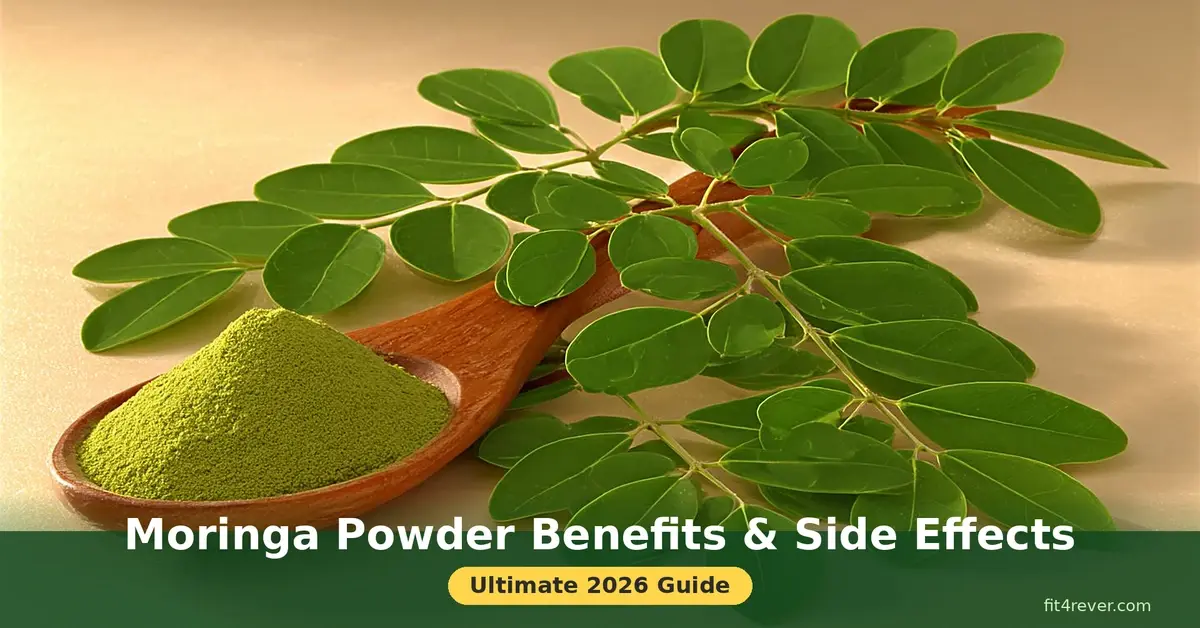
Moringa powder is made from the dried leaves of Moringa oleifera, also called the drumstick tree or miracle tree. It grows fast in hot, dry places where many crops struggle.
Farmers pick the leaves, dry them in the shade, and grind them into a fine green powder. Shade-drying matters because high heat and direct sun destroy some vitamins and antioxidants.
Other parts of the tree are used too, but they aren’t the same:
- Leaves: The source of almost all powder. The safest part for daily use.
- Pods: The long “drumsticks,” mostly used in cooking, like sambar and curries.
- Seeds, root, and bark: Used traditionally, but they can be harmful in large amounts. Avoid them, especially in pregnancy.
For a supplement, choose leaf powder. That’s what this guide covers.
What’s Inside?
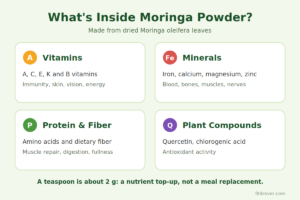
Exact numbers vary by brand and growing conditions. For general nutrient data on leafy greens, you can check the USDA FoodData Central database
| Nutrient group | Examples | Why it matters |
|---|---|---|
| Vitamins | A, C, E, K, B vitamins | Immunity, skin, vision, blood clotting, energy |
| Minerals | Iron, calcium, magnesium, potassium, zinc | Blood, bones, muscles, nerves |
| Protein and fiber | Essential amino acids, dietary fiber | Muscle repair, digestion, fullness |
| Plant compounds | Quercetin, chlorogenic acid, kaempferol | Antioxidant activity |
Here’s the catch. A teaspoon is only about 2 grams. So moringa powder tops up your diet. It doesn’t replace a multivitamin or a proper meal.
Moringa Powder Benefits: What Does the Research Say?
Human studies carry the most weight. Animal and lab studies come next. Traditional use is the weakest evidence. You can browse the published moringa research on PubMed{:target=”_blank” rel=”noopener”} yourself. Here are the benefits of moringa powder, ranked by proof:
| Benefit | Evidence | What it means |
|---|---|---|
| Nutrient top-up | Strong | Adds vitamins, minerals, and protein |
| Antioxidant support | Strong in the lab | Real-life effect is modest |
| Blood sugar support | Promising | Small human studies |
| Cholesterol support | Promising | Not a statin replacement |
| Inflammation, brain, liver | Early | Mostly animal and lab studies |
| Skin and hair | Limited | Oil may help skin. Eating it is less studied |
| Weight loss | Weak | No proof it burns fat |
1. It Fills Nutrition Gaps
This is the best-supported benefit. Many people don’t eat enough leafy greens, and diets heavy on processed food often run low on iron, calcium, and vitamin A. A teaspoon adds a small amount of each, plus fiber. Think of it as insurance on top of a balanced meal plan, not a miracle.
2. It May Support Healthy Blood Sugar
Moringa contains fiber and plant compounds like chlorogenic acid. Researchers think these may slow how fast sugar enters your blood. Some small human studies saw lower blood sugar, but they were small and short. The results are interesting, not conclusive.
Important: If you take diabetes medication, talk to your doctor first. Moringa plus medication could push your sugar too low.
3. It May Help Cholesterol
Early studies suggest moringa may lower LDL (“bad”) cholesterol. Fiber and antioxidants are the likely reasons. The evidence is limited, so a heart-healthy diet and any prescribed medication come first.
4. It Provides Antioxidants
Antioxidants protect cells from free radicals, the unstable molecules linked to aging. Moringa is rich in them. This is where the “anti-inflammatory” claims come from. But most of that research is in labs and animals, so treat it as promising, not proven.
5. It May Support Energy
Low iron makes you tired. B vitamins help turn food into energy. Moringa has both. If your diet is low in these, you may feel better. If your diet is already good, don’t expect a big change.
If you have hemochromatosis (iron overload), skip moringa unless your doctor approves.
What About Weight Loss, Skin, and Brain Health?
Let’s be honest. Moringa powder doesn’t melt fat. Fiber may help you feel full, and that’s about it. Real weight loss still comes from a calorie deficit and regular movement, such as hitting a realistic daily step count.
Moringa oil on the skin may help dryness, but eating the powder is less proven. For the brain, mood, and liver, most evidence comes from animals. Moringa is not a treatment for depression, memory loss, or liver disease.
What Is Moringa Powder Good For in Daily Life?
These are example situations, not medical advice.
- The plant-based eater: Sara eats mostly vegetarian and worries about iron. She blends moringa powder into a smoothie with orange juice, since vitamin C helps iron absorption.
- The busy professional: Dan skips vegetables on workdays. He stirs a teaspoon into his morning oats. Ten seconds, no cooking.
- The gym-goer: Maya adds it to a post-workout shake with protein and mango. She checks her daily target with a protein intake calculator, and the mango hides the earthy taste.
Moringa Powder Uses: How to Take It
How Much Should You Take?
There’s no official daily dose. Most people use 1-2 teaspoons (2-4 grams) a day.
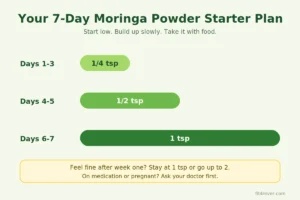
Don’t start there. Begin with ¼ teaspoon for the first week, then move to ½, then 1 teaspoon. Jumping to a heaping spoon on an empty stomach often causes nausea or loose stools.
When and How
Any time works. Consistency matters more than timing. Take it with food, ideally with some fat like yogurt, nut butter, or olive oil, since vitamins A, E, and K absorb better that way. Pair it with lemon or orange for better iron absorption.
Easy Moringa Powder Recipes
Green smoothie (best for beginners): Blend 1 frozen banana, 1 cup frozen mango, a handful of spinach, 1 teaspoon moringa powder, and 1 cup almond milk. Want it fresher? Add a mini cucumber. It’s very light, and you can see how many calories are in a mini cucumber before you add it.
Golden latte: Whisk 1 cup warm milk, ½ teaspoon turmeric, a pinch of ginger, 1 teaspoon moringa powder, and a little honey. Whisk hard to avoid clumps.
Overnight oats: Stir ½ teaspoon into oats, milk, and chia seeds. Chill overnight. It’s mild enough that you’ll barely notice it.
Dal, soups, and curries: Stir 1 teaspoon in near the end of cooking. Heat breaks down some vitamins, so don’t boil it for long.
Tips for Better Taste
- Pair it with citrus, ginger, mango, banana, or coconut.
- Use small amounts. Too much turns food bitter.
- Don’t stir a spoonful into plain water. It tastes very grassy.
- Use warm liquid, not boiling. Very hot water can make it bitter.
Powder, Capsules, or Tea?
For most people, powder is the best start. It’s flexible, budget-friendly, and adds fiber. Capsules have no taste and suit travel, but cost more per gram. Tea is gentle, but you discard the leaves, so you get less. Be cautious with concentrated extracts, since they’re less studied for safety.
How Does It Compare to Matcha and Spirulina?
They do different jobs. Matcha has caffeine (about 30-70 mg per teaspoon). Moringa and spirulina have none. Spirulina has the most protein. Moringa offers a broad mix of vitamins and minerals at a moderate price. Add one new powder at a time so you know what’s working.
Moringa Powder Myths vs. Facts
A lot of moringa advice online is exaggerated. Here’s what holds up.
Myth: Moringa powder cures diabetes.
Fact: It may support blood sugar, but it isn’t a treatment. Never stop medication without your doctor’s advice.
Myth: It melts belly fat.
Fact: There’s no solid proof of that. Fiber may help you feel full, and that’s about it.
Myth: More moringa powder means better results.
Fact: High doses raise the risk of stomach upset and medication interactions. A small, steady amount works better.
Myth: All moringa products are the same.
Fact: Leaf powder, seeds, root, and extracts differ a lot in safety, and quality varies hugely between brands.
Myth: Natural means safe for everyone.
Fact: Natural products can still interact with medication and may not suit people with certain conditions.
A Simple 7-Day Moringa Powder Starter Plan
Here’s an easy way to try moringa powder safely. It’s a general idea, not medical advice. If you have a health condition, check with your doctor first.
- Days 1-3: ¼ teaspoon in a smoothie or oats, taken with food.
- Days 4-5: ½ teaspoon. Try it stirred into dal or soup.
- Days 6-7: 1 teaspoon in a smoothie or golden latte.
- After week one: If you feel fine, stay at 1 teaspoon or go up to 2.
Keep it consistent for 3-4 weeks before judging results. Notice how your digestion, energy, and appetite feel. If anything feels off, cut back or stop.
What Should You Expect in the First Few Weeks?
Be realistic. Most people won’t feel a dramatic change. At best, you may notice steadier energy, easier digestion, or simply a better habit of eating greens. That’s a good outcome.
If you notice nothing, that doesn’t mean the moringa powder is fake. It may mean your diet was already covering those nutrients. And if you take it for a medical reason, like blood sugar, your lab results matter far more than how you feel.
Moringa Powder Side Effects and Risks
Most healthy adults tolerate leaf powder well. But “natural” doesn’t mean “risk-free.”
Common Side Effects
Nausea, loose stools, heartburn, gas, and bloating. These usually happen when you take too much, too fast, or on an empty stomach. Cut back, build up slowly, and take it with food. Fiber also needs fluid, so check your daily water needs and drink enough throughout the day.
Medication Interactions
Talk to your doctor first if you take:
- Diabetes medication: moringa may lower blood sugar further.
- Blood pressure medication: the effects can add up and cause dizziness.
- Blood thinners (like warfarin): moringa contains vitamin K, which affects clotting.
- Thyroid medication: moringa may affect thyroid function.
For general guidance on supplement safety, see the NIH Office of Dietary Supplements{:target=”_blank” rel=”noopener”}.
Pregnancy and Breastfeeding
Moringa root, bark, and seeds are not considered safe in pregnancy. For leaf powder, safety data is limited. Ask your doctor before using it while pregnant or nursing.
Heavy Metals
Moringa plants can absorb heavy metals from soil. A badly sourced powder may contain lead, cadmium, or arsenic. This is one of the biggest real-world risks, which is why testing matters.
Who Should Avoid It?
Skip it, or ask your doctor first, if you’re pregnant or nursing, take the medications above, or have a thyroid, kidney, liver, or autoimmune condition, or iron overload. Also ask if you have surgery planned soon.
How to Choose a High-Quality Moringa Powder
Not all powders are equal. Use this checklist:
- Color: Bright green. Brown or dull means oxidized and old.
- Smell: Fresh and grassy, never musty.
- Ingredients: One only: moringa leaf. No fillers or sweeteners.
- Drying: Shade-dried is best.
- Testing: Third-party lab results for heavy metals. Ask for a certificate of analysis.
- Certification: Organic is a good sign.
- Price: A suspiciously low price often means filler or old stock. A month’s supply typically costs about $10-25, though it varies by country and brand.
Storage: Keep it airtight in a cool, dark cupboard, away from the stove. Use it within 6-12 months. A neglected bag fades to brown within weeks.
Frequently Asked Questions
Can I take moringa powder every day?
For most healthy adults, a small daily amount of leaf powder is generally fine. If you have a health condition or take medication, ask your doctor first.
Does moringa powder really work?
It’s a nutritious food with promising early research. It isn’t a cure for any disease. Think “helpful add-on,” not “magic fix.”
What does moringa powder taste like?
Earthy and slightly bitter, a bit like spinach. Fruit or soup softens it.
How long until I see results?
There’s no fixed timeline. Give it a few weeks of regular use, and don’t expect overnight changes.
Is it safe for kids?
There isn’t enough reliable data. Ask a pediatrician first.
Can I mix moringa powder into coffee or tea?
Yes. Stir it into a warm (not boiling) drink. Very hot liquid can make it taste more bitter. Milk or a little honey helps.
Can I take moringa powder with other supplements?
Often yes, but check with your doctor or pharmacist, especially if you take iron, thyroid, blood sugar, or blood-thinning products.
Should I take moringa powder on an empty stomach?
It’s gentler with food. On an empty stomach, it’s more likely to cause nausea or loose stools.
The Bottom Line
Moringa powder is a nutritious, affordable way to add vitamins, minerals, and antioxidants to your day. The research on blood sugar and cholesterol looks promising but is still early. It won’t burn fat or cure disease, and anyone who says otherwise is overselling it.
Start small. Buy tested, single-ingredient powder. Add it to food you already enjoy. And check with your doctor if you take medication.
Want to plan your nutrition properly? Browse our free fitness calculators → Work out your calories, protein, and water needs in a minute.
Sources and further reading
- USDA FoodData Central: nutrient data for foods
- PubMed: Moringa oleifera research: peer-reviewed studies
- NIH Office of Dietary Supplements: supplement safety guidance
Medical disclaimer: This article is for general information only and isn’t medical advice. See our health disclaimer. Talk to your doctor before starting any supplement, especially if you’re pregnant, nursing, or taking medication.
