
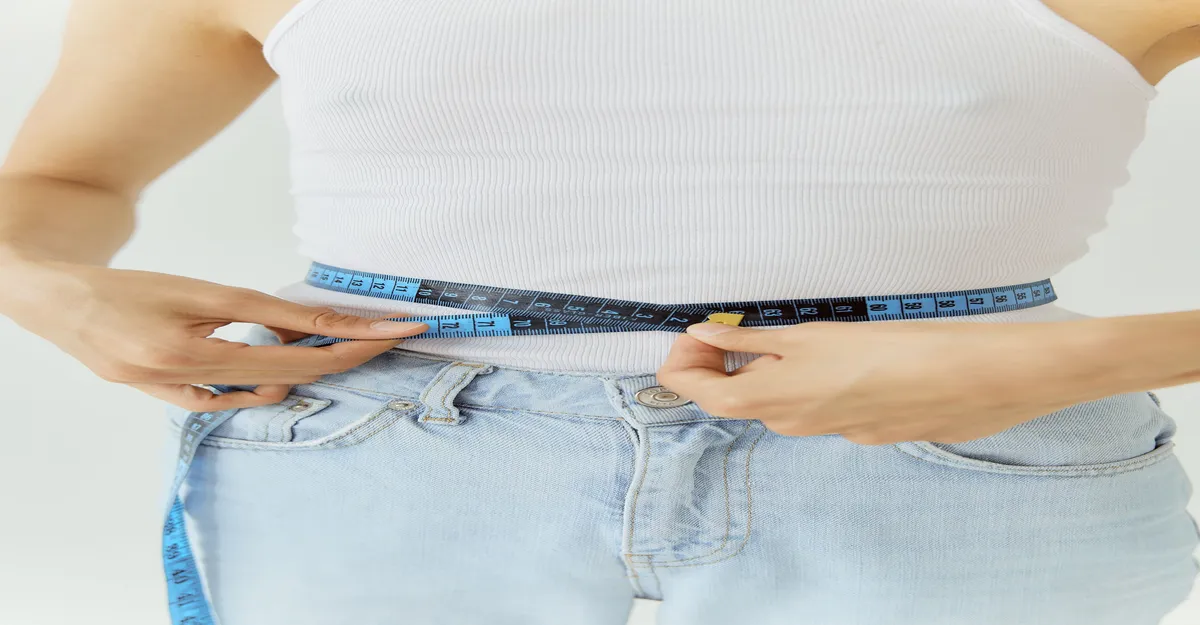
If you’re trying to figure out how to calculate BMI without weight, let’s start with the honest answer: you can’t calculate an exact BMI without weight.
The formula literally needs both weight and height – that’s just math, not a trick. If someone’s promising you a precise BMI with zero weight input anywhere in the process, they’re rounding a lot more than they’re letting on.
But here’s what you can do, and it’s probably closer to what you actually need: estimate your weight closely enough to get a usable BMI, or skip weight altogether and use a measurement that tells you something similar – and arguably more useful.
That’s the core idea behind this whole guide: how to calculate BMI without weight using practical, real-world methods anyone can use, no lab equipment required.
Maybe you’re at a hotel gym with no scale in sight. Maybe you had a doctor’s appointment three months ago and haven’t weighed in since.
Maybe you just don’t own a scale and don’t want to buy one for a five-minute check. Whatever brought you here, this covers all three situations.
How to Calculate BMI Without Weight: Is It Actually Possible?
Straight answer: no, not in the literal sense. BMI is weight in kilograms divided by height in meters squared. Take weight out, and you don’t have BMI anymore; you have something else.
Still, when people search how to calculate BMI without weight, what they usually want is a reasonable estimate – not laboratory-level precision.
There are two practical paths if you’re trying to learn how to calculate BMI without weight:
- Estimate your weight closely enough (self-estimate, gym scale, last doctor’s visit) and run the normal formula.
- Skip weight entirely and use waist-to-height ratio, which needs nothing but a tape measure and gives you a comparable read on health risk.
Both get you a real number to work with. Neither is a diagnosis – but neither is guesswork either, if you do it right.
Method 1: Estimate Your Weight Without a Scale (How to Calculate BMI Without Weight, Step 1)
This sounds less reliable than it is. In the years I’ve spent writing about weight tracking, the most common mistake I see people make is assuming a self-estimate is “just a guess.” It usually isn’t.
A well-known study published in the Revista de Saúde Pública compared self-reported weight against measured weight in nearly 660 adults and found 87% of people were accurate within 4 kg, and 95% were within 6 kg.
Most adults who track their weight even loosely can guess their current weight within a few kilograms. If you weighed 75 kg at your last doctor’s visit four months ago and your clothes fit the same, you’re very likely still within a few kilograms of that. Use it.
A few ways to get a workable number:
- Anchor to your last known weight. Doctor’s visit, gym check-in, even a hotel scale from a trip last month – any recent reading is more accurate than a guess from scratch. Adjust slightly if you know you’ve been eating differently or training harder.
- Find a scale you’re not thinking of. Gyms almost always have one near the locker room. Pharmacies (CVS, Boots, Walgreens) often have a public scale near the pharmacy counter. Doctor’s offices will let you hop on theirs even outside an appointment, usually without asking why.
- Self-estimate as a last resort. If you genuinely have no recent number and no access to a scale, a careful guess based on how your clothes fit is still better than nothing – just don’t treat the resulting BMI as precise. Round conservatively and flag it to yourself as an estimate, not a data point.
Once you have a weight – even an estimated one — the formula is simple:
BMI = weight (kg) ÷ height (m)²
Example: You estimate your weight at 70 kg and your height is 1.70 m (5’7″).
- 70 ÷ (1.70 × 1.70)
- 70 ÷ 2.89 = 24.2
Estimated BMI: 24.2 – within the “normal” range (18.5–24.9), though close to the upper edge. Remember, this is built on an estimated weight, not a measured one.
If your real weight is 68 kg instead, the BMI drops to 23.5. Estimates move the number more than people expect.
This is where the basic idea of how to calculate BMI weight and height comes in – once you have both numbers, the calculation itself is straightforward. This is really the base concept behind learning how to calculate BMI without weight in a practical way.
Method 2: Use Waist-to-Height Ratio (No Scale Required)
If you’re serious about learning how to calculate BMI without weight without any estimation at all, this is the real method.
This is the one approach here that genuinely doesn’t need weight at all – not estimated, not remembered, not guessed. Just a tape measure.
How to measure:
- Wrap a soft tape measure around your waist at belly button level, standing relaxed (not sucking in, not flexing).
- Note the measurement in inches or centimeters.
- Divide your waist measurement by your height, in the same unit.
Waist-to-Height Ratio (WHtR) = waist ÷ height
Example: A 42-year-old man measures a 91 cm waist and is 178 cm tall.
- 91 ÷ 178 = 0.51
A WHtR under 0.5 is generally considered the healthy cutoff for most adults, so 0.51 sits right at the edge – a useful nudge to pay attention, not a red flag.
Why this matters beyond convenience: several studies over the past decade have found waist-to-height ratio predicts cardiovascular and metabolic risk about as well as BMI does, according to the CDC – in some analyses, slightly better, because it accounts for where fat is stored, not just total mass.
A bodybuilder with an 81 cm waist and heavy muscle mass will show a healthy WHtR even if their BMI reads “overweight.” BMI can’t tell the difference; a tape measure around the waist can.
This won’t replace a full medical assessment, but as a weight-free check, it’s the most legitimate one available. If you had to pick just one method that truly teaches you how to calculate BMI without weight, WHtR is it.
Method 3: Waist-to-Hip Ratio as a Secondary Check
Less essential than WHtR above, but easy to add if you’re already measuring: waist-to-hip ratio (WHR) tells you about fat distribution rather than overall size.
- Measure your waist as above.
- Measure your hips at the widest point.
- Divide waist by hips.
WHR = waist ÷ hips
Generally, a ratio above 0.90 for men or 0.85 for women is associated with higher cardiovascular risk, according to WHO guidance on waist circumference and waist-hip ratio.
It’s a different signal than BMI or WHtR – it’s specifically flagging abdominal fat concentration, which matters for heart health independent of total body size.
This is another way of extending the concept of how to calculate BMI without weight, just through fat distribution instead.
Think of it as a cross-check, not a replacement. If your WHtR and WHR both point the same direction, that’s more informative than either number alone.
How to Calculate BMI Without Weight: Estimated Calculator (Height + Waist Measurement)
[Interactive tool placeholder: enter height and waist measurement to get an estimated BMI range or WHtR-based category. Include a visible disclaimer that this produces an estimate, not a clinical BMI, and is not diagnostic.]
Once you have an estimated or actual weight, plug it into our full BMI calculator to get the exact category and a healthy weight range based on your height.
The Standard BMI Formula (For When You Do Have a Weight)
This section is for when you move past how to calculate BMI without weight and have an actual number in hand. We’ve now covered how to calculate BMI without weight – let’s look at how the standard formula works once an actual weight is available.
If you get access to an actual weight – even briefly, on a gym scale you don’t own – here’s the full formula for reference. This is really the core of how to calculate BMI weight once a real number is in hand.
Imperial: BMI = 703 × weight (lbs) ÷ height (in)² Metric: BMI = weight (kg) ÷ height (m)²
If you’re working in metric – essentially how to calculate BMI weight in kg and height in cm — the formula looks like this:
Example: Someone weighing 70 kg at 1.75 m (175 cm) tall:
- 70 ÷ 1.75² = 70 ÷ 3.0625 = 22.9
BMI: 22.9 – within the standard “normal” range of 18.5–24.9.
Whether you’re working in kilograms and centimeters or pounds and inches, the concept stays the same – only the units change.
BMI and Weight Loss – Should You Track It?
Many people search how to calculate BMI weight loss progress because that’s exactly what they’re using it for. Here’s an important nuance:
BMI can show overall direction – whether the number is going down or up — but it can’t tell you whether you’re losing fat or muscle.
If you’re on a weight loss journey, don’t make BMI your only metric. Pair it with a waist measurement — if BMI is trending down and your waist measurement is also shrinking, that’s a more reliable sign you’re losing fat, not just water weight or muscle.
If you already have a target BMI in mind, our reverse BMI calculator works backward from that number to tell you the actual weight you’d need to hit it – a lot more concrete than a vague “get your BMI under 25.”
And once you know the target weight, our calorie deficit calculator can help you map out how to actually get there.
Mobile Apps and Smart Scales – Are They Worth It?
A lot of people ask how to calculate BMI without weight these days because they want to measure something using just their phone, without a physical scale.
There are plenty of apps that claim to “scan” your body via camera and estimate weight or body fat. These are useful, but their limitations matter.
Most of these apps work one of two ways: they either generate a statistical estimate from data you provide (age, height, gender, activity level), or they estimate body proportions from a camera image.
Both methods carry a fairly wide error margin – especially for people whose body type falls outside the “average” range, like those who are very tall, very short, or have an unusual muscle-to-fat ratio.
Smart scales are another option – they connect to your phone via Bluetooth and estimate body fat percentage, muscle mass, and water percentage alongside weight.
They give you more information than a regular scale, but they’re still a scale – and the whole point of this article is what to do when you don’t have one.
If you want to invest in one, a smart scale is a solid long-term option, but for right now, the methods above (weight estimation or waist-to-height ratio) work instantly without any purchase.
One thing worth remembering: whether it’s an app, a smart scale, or a manual estimate – no method is 100% precise. The difference is just how much error margin is acceptable for your purpose.
If you want a number for general health awareness, any reasonable estimate is enough. If you need an exact number for a medical decision, a doctor’s or clinic’s proper scale is the right path.
Two People, Two Situations – A Real Example (How to Calculate BMI Without Weight in Practice)
Let’s walk through a practical example of how how to calculate BMI without weight actually plays out in real life.
Sara, 29, goes to the gym regularly but doesn’t keep a scale at home – she last checked her weight three months ago at a gym check-in: 58 kg, height 162 cm. Her clothes still fit the same way, so she uses that as her estimate:
- BMI = 58 ÷ (1.62 × 1.62) = 58 ÷ 2.62 = 22.1
That falls in the “normal” range, so the estimate is good enough for Sara – no urgent action needed.
On the other hand, Ahmed, 45, doesn’t remember his weight and has no recent number available. All he has is a tape measure. His waist is 96 cm and his height is 175 cm:
- WHtR = 96 ÷ 175 = 0.55
That’s above the 0.5 healthy cutoff, so for Ahmed, this is a clear signal to pay attention to his waist — even without knowing his exact weight.
That’s the real difference between a weight-based estimate and a waist-based method: each works better depending on what information you actually have available.
How to Calculate BMI Without Weight – And When to Skip It Entirely
Whether you have an exact weight or an estimated one, BMI has known blind spots – and those blind spots get bigger the more you’re estimating around a scale:
- It doesn’t know muscle from fat. A muscular person carrying more weight can read “overweight” on paper while carrying very little actual body fat. Our body fat calculator (US Navy circumference method) is a better check in this case, since it’s built on waist, neck, and hip measurements rather than weight alone.
- Age and sex shift what’s “normal.” Older adults tend to carry more body fat than younger adults at the same BMI; women tend to carry more than men at an equivalent BMI.
- It says nothing about where fat sits. Two people with the same BMI can have very different health risk profiles depending on whether that weight sits around the waist or elsewhere. If your BMI seems off for your build, our ideal weight calculator uses multiple established formulas (Devine, Robinson, Miller, Hamwi) rather than a single BMI cutoff, which can give you a more balanced picture.
These estimation methods are particularly shaky for a few groups: pregnant people, competitive athletes, adolescents still growing, and adults over 65 – in all these cases, standard BMI math (estimated or exact) tends to misrepresent actual health status.
For more on why calculators alone can miss the full picture, see our article on Coach Calorie: why calculators alone don’t work.
If you’re checking your BMI regularly because you’re worried about a health condition, an estimated number from a waist measurement is a fine starting point – but it’s not a substitute for an actual conversation with a doctor who can look at your full picture.
FAQ
Can BMI be calculated without weight and height at all?
No. BMI has only two variables – weight and height – and both are required. If neither is available, no method can give you anything more than a very rough guess, not a real BMI. If only height is available, something like waist-to-height ratio is a far more meaningful approach.
Is waist-to-height ratio more accurate than BMI?
Neither is more “accurate” exactly – they measure different things. BMI estimates overall mass relative to height; WHtR estimates fat distribution. Several studies suggest WHtR is at least as good a predictor of cardiovascular risk, with the added benefit of not needing a scale at all.
How accurate is self-estimated weight?
More accurate than most people assume. A peer-reviewed study of nearly 660 adults (published in Revista de Saúde Pública) found that 87% of participants self-reported their weight within 4 kg of their actual measured weight, and 95% were within 6 kg – with a very high overall correlation (r = 0.97) between reported and measured weight. It’s usable for a rough BMI, not for tracking small changes over time.
Can I calculate BMI from a photo?
Not reliably. Photo-based body composition tools exist, but they estimate body fat percentage using visual cues and are generally less accurate than a tape measure or scale, especially across different body types and lighting conditions.
What’s a healthy waist size without knowing my weight?
As a rough guide, keeping your waist measurement under half your height (a WHtR below 0.5) is a reasonable target for most adults, independent of what you weigh.
By now you know how to calculate BMI without weight – either by estimating your weight, or by using a weight-free method like waist-to-height ratio.
If you want a complete, accurate picture of your body rather than just an estimate, the best move is to get an actual weight measurement once and plug it into our full BMI calculator for the exact category.
And if you’re working toward a specific goal weight, our reverse BMI calculator can show you exactly what number to aim for. Come back to this guide whenever you need a reminder of how to calculate BMI without weight using these two simple, practical methods.
A quick note before we start: This article is for general educational purposes and isn’t a substitute for professional medical advice. BMI and the estimation methods below are screening tools, not diagnoses – if you have specific health concerns about your weight, talk to a doctor. See our full health disclaimer for more.
