
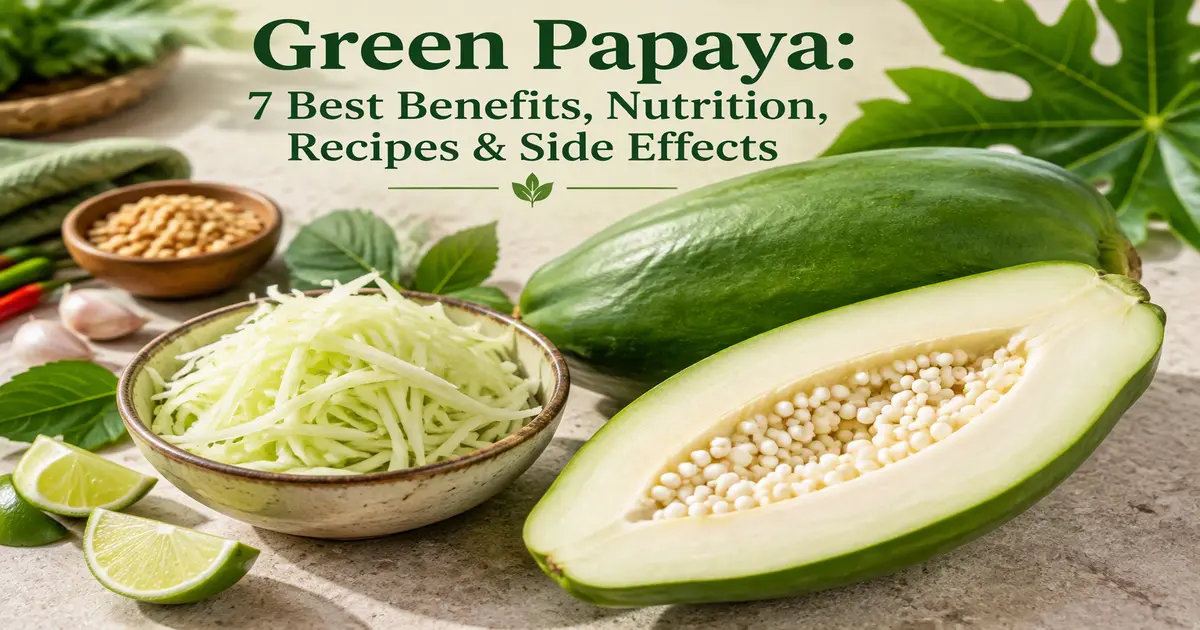
Green papaya is the unripe form of the papaya fruit, known for its firm texture, mild flavor, and versatility in savory dishes. It is commonly used in salads, soups, curries, and stir-fries, particularly in Southeast Asian cuisine. It also provides dietary fiber and naturally occurring plant nutrients.
Meta Title: Green Papaya: Benefits, Nutrition, Recipes & Safety
Meta Description: Discover green papaya benefits, nutrition, easy recipes, side effects, and where to buy this versatile unripe fruit.
Green Papaya: Benefits, Nutrition, Recipes, and How to Eat It
Green papaya is simply an unripe papaya with firm, pale flesh and a mild, slightly bitter taste. Unlike ripe papaya, which is usually eaten as a sweet fruit, green papaya is commonly prepared as a vegetable in salads, soups, curries, and stir-fries, particularly in Southeast Asian cooking.
Key Takeaways
- Green papaya is the unripe form of the common papaya fruit.
- It has a mild flavor and firm texture that works well in savory dishes.
- It contains dietary fiber and naturally occurring plant nutrients.
- Green papaya salad is one of its best-known traditional preparations.
- It can be eaten raw or cooked, depending on the recipe.
- Pregnant people should exercise caution with unripe papaya because of concerns about its natural latex content.
- Fresh green papaya is often available at Asian grocery stores and international produce markets.
What Is Green Papaya?
At first glance, an unripe papaya doesn’t look particularly exciting. Its skin is green, the flesh is pale, and the texture is much firmer than the orange fruit most people recognize.
But that’s exactly why cooks value it.
Green papaya is harvested before the fruit reaches full ripeness. At this stage, it has a relatively neutral flavor, allowing it to absorb seasonings, sauces, and spices without overpowering the rest of a dish.
In Thailand and Laos, it is a familiar ingredient in traditional savory recipes. It is shredded into salads, added to soups, and sometimes cooked with other vegetables.
Is Green Papaya Just Unripe Papaya?
Yes. Green papaya is simply papaya picked before it ripens.
The difference between the two is mainly their maturity, texture, flavor, and culinary use.
| Feature | Green Papaya | Ripe Papaya |
|---|---|---|
| Skin | Mostly green | Yellow or orange |
| Flesh | Pale white or light green | Orange, yellow, or reddish |
| Texture | Firm and crunchy | Soft and juicy |
| Taste | Mild and slightly bitter | Sweet and fruity |
| Common use | Salads, soups, curries | Fresh fruit, smoothies, desserts |
The two forms come from the same plant, Carica papaya. They simply serve different purposes in the kitchen.
Why Is Green Papaya Used as a Vegetable?
Its firm texture makes it easy to shred, slice, grate, and cook.
Unlike ripe papaya, which can become mushy when heated, the unripe fruit holds its shape better in many savory preparations.
It also absorbs dressings and spices nicely. That’s one reason it works so well in dishes containing lime juice, garlic, chilies, fish sauce, and other strong flavors.
Green Papaya Benefits: What the Evidence Actually Says
There are several reasons to include this ingredient in a varied diet. However, it’s worth separating its nutritional value from claims that go beyond the available scientific evidence.
1. Provides Dietary Fiber
Green papaya contributes dietary fiber to meals. Fiber is an important part of a balanced eating pattern because it supports normal digestive function and helps maintain regular bowel movements.
It can also make meals more satisfying, particularly when combined with other vegetables, legumes, or protein-rich ingredients.
2. Contains Naturally Occurring Enzymes
One interesting feature of unripe papaya is its natural enzyme content.
It contains papain and other protein-digesting enzymes, particularly in its milky latex. These enzymes help break down proteins and are also used in certain food-processing applications.
However, this doesn’t mean eating green papaya treats digestive disorders or replaces digestive medication. Those are different claims, and stronger clinical evidence would be needed to support them.
3. Adds Variety to a Balanced Diet
Eating the same vegetables every day can become repetitive. Green papaya offers another way to add plant foods to your meals.
Its mild flavor makes it particularly useful in savory recipes where you want some crunch without introducing a strong taste.
Pair it with leafy vegetables, carrots, tomatoes, beans, or a protein source to create a more complete meal.
4. Works in Different Cooking Styles
Another practical advantage is its versatility.
You can enjoy it raw in a traditional salad, lightly sauté it with garlic, or add it to a warm vegetable soup. It also works with different seasoning styles, from spicy Thai dressings to simple lime-and-herb combinations.
This makes it easier to incorporate into different eating habits.
5. Contains Plant-Based Nutrients
Like other vegetables and fruits, unripe papaya contributes a mixture of naturally occurring nutrients.
Its exact nutritional composition depends on the variety, growing conditions, and maturity of the fruit. It is important not to assume that nutrition figures for fully ripe papaya apply precisely to its unripe form.
Green Papaya Nutrition: What Should You Know?
Green papaya is a plant-based food that can contribute fiber and other nutrients to everyday meals.
Its nutritional profile differs from that of fully ripe papaya, so the exact values should not be treated as interchangeable.
For a general nutrition overview, consider the following components:
| Nutritional component | Why it matters |
|---|---|
| Dietary fiber | Supports normal digestive function |
| Vitamin C | Contributes to normal immune function and collagen formation |
| Potassium | Helps support normal muscle and nerve function |
| Folate | Supports normal cell division |
| Water | Contributes to daily fluid intake |
| Plant enzymes | Include naturally occurring protein-digesting enzymes. |
The amounts of these nutrients vary. For accurate calorie and nutrient tracking, use a food database that identifies the specific food and preparation method rather than relying on ripe-fruit values for an unripe product.
Does Green Papaya Have Fewer Calories Than Ripe Papaya?
Ripening changes the composition and sweetness of papaya, but it would be misleading to give one universal calorie figure for every unripe variety.
Preparation also matters. A plain shredded salad is different from a restaurant version containing peanuts, palm sugar, dried shrimp, or a sweet dressing.
If you’re tracking your food intake, measure the actual ingredients in your serving.
How to Eat Green Papaya
There isn’t just one correct way to prepare it. In fact, the best method depends on whether you enjoy crunchy salads or prefer something warm.
Before cooking, wash the fruit, peel away the outer skin, cut it open, and remove the seeds. The remaining flesh can be shredded, sliced, or cut into small pieces.
Eat It Raw in Salads
Raw preparation is particularly popular in Southeast Asian cuisine.
Shredded papaya provides a crisp texture that works well with sour, salty, spicy, and slightly sweet ingredients.
Cook It in Soups and Curries
You can also add sliced pieces to vegetable soups, coconut-based curries, and other savory dishes.
The fruit softens as it cooks and takes on the flavor of the surrounding ingredients.
Stir-Fry It With Vegetables
For a quick meal, combine shredded papaya with carrots, garlic, onions, and your preferred seasoning.
Cook briefly so it softens slightly without losing all its texture.
Cooking tip: If you’re trying green papaya for the first time, start with a simple stir-fry or salad. Its mild flavor makes it easy to experiment with familiar ingredients.
Green Papaya Recipes Worth Trying
Some ingredients become much easier to appreciate once you try them in a proper recipe. Green papaya is one of those foods.
Here are three approachable preparations.
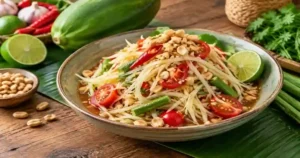
1. Traditional Green Papaya Salad
This is probably the most recognizable preparation.
Known as Som Tum in Thai cuisine, this salad combines shredded unripe papaya with ingredients that create a balance of sour, sweet, salty, and spicy flavors.
Ingredients:
- 2 cups shredded green papaya
- 1 small carrot, shredded
- 5 cherry tomatoes
- 2 garlic cloves
- 1–2 Thai chilies
- 1 tablespoon lime juice
- 1 tablespoon fish sauce
- 1 teaspoon palm sugar
- 2 tablespoons roasted peanuts
- A few long beans, cut into small pieces
Preparation:
- Crush the garlic and chilies lightly in a mortar.
- Add the tomatoes and long beans, gently pressing them to release their juices.
- Mix in lime juice, fish sauce, and palm sugar.
- Add shredded papaya and carrot.
- Toss everything together until the dressing coats the vegetables.
- Finish with roasted peanuts and serve fresh.
Adjust the chili level according to your preference.
For a vegetarian or vegan version, replace fish sauce with an appropriate plant-based alternative and check the remaining ingredients.
2. Simple Green Papaya Stir-Fry
If you prefer cooked vegetables, this recipe is a good starting point.
Ingredients:
- 2 cups shredded green papaya
- 1 small onion
- 2 garlic cloves
- 1 tablespoon cooking oil
- 1 small carrot
- A little soy sauce
- Black pepper to taste
Preparation:
Heat the oil in a pan and sauté the garlic and onion. Add the carrot and shredded papaya, then stir-fry for several minutes.
Season with soy sauce and black pepper. Serve warm with rice or your preferred protein.
3. Green Papaya Vegetable Soup
This is a simple way to use the fruit when you want something comforting.
Ingredients:
- 1 cup peeled and sliced green papaya
- 1 carrot
- ½ onion
- 2 cups vegetable broth
- Fresh ginger
- Salt and pepper
Preparation:
Bring the vegetable broth to a gentle boil. Add the onion, ginger, carrot, and papaya.
Allow everything to simmer until the vegetables become tender. Season to taste and serve warm.
You can add tofu, beans, or chicken if you want a more filling meal.
What Does Green Papaya Taste Like?
The flavor is quite different from the sweetness people associate with ripe papaya.
Green papaya has a mild, relatively neutral taste with a slight bitterness in some varieties. Its biggest appeal is its texture.
When raw, it is crisp and refreshing. Once cooked, it becomes softer while still holding its shape reasonably well.
Think of it as a vegetable that takes on the character of the ingredients around it.
That’s why it works particularly well with lime, chili, garlic, herbs, and savory sauces.
Where to Buy Green Papaya
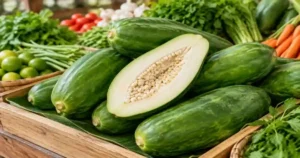
Finding unripe papaya can take a little more effort than buying a regular ripe papaya.
Many conventional supermarkets primarily stock ripe fruit. However, specialty grocery stores often have better selections.
If you’re wondering about green papaya where to buy, try:
- Asian grocery stores, especially Thai and Southeast Asian markets.
- International supermarkets with fresh tropical produce.
- Caribbean and African grocery stores.
- Specialty fruit and vegetable markets.
- Online fresh-produce retailers that deliver tropical fruits.
How to Find Green Papaya Near Me
When searching online, try specific phrases such as “unripe papaya grocery store,” “Thai green papaya,” or “fresh Asian vegetables near me.”
Calling the store before visiting can save time. Ask whether they have firm, unripe papayas rather than fully ripe yellow or orange ones.
Some shops may list the product under its alternative name, unripe papaya.
What Is the Green Papaya Season?
There isn’t one universal harvest season because papayas are grown in different tropical and subtropical regions.
In many producing countries, papaya is available throughout much of the year. However, imports, local growing conditions, and transportation affect availability in other markets.
In Germany and other European countries, for example, specialty stores may carry green papaya less consistently than ripe papaya.
Green Papaya Menu: What to Look for at Restaurants
If you enjoy trying unfamiliar dishes, Thai and Lao restaurants are good places to explore preparations made with unripe papaya.
One dish worth looking for is Som Tum, a traditional shredded papaya salad.
Other menu descriptions may simply say papaya salad, Thai papaya salad, or Lao papaya salad.
Ingredients vary by restaurant. Some versions include dried shrimp, fish sauce, peanuts, tomatoes, long beans, and different levels of chili.
If you have food allergies or follow a vegetarian diet, ask about the dressing and preparation method before ordering.
Looking for Green Papaya in Stockton?
For people searching specifically for green papaya in Stockton, there is a restaurant called Green Papaya at 6262 Pacific Ave, Stockton, California 95207.
Visit Stockton lists the restaurant as serving Lao and Thai dishes, including papaya salad. Its restaurant listing is a useful starting point if you’re interested in trying the dish locally.
Check the current menu and opening hours before visiting, as restaurant details can change.
What Are the Side Effects of Unripe Papaya?
Green papaya is a commonly used food ingredient, but it isn’t suitable for everyone in every circumstance.
A few precautions are worth understanding before adding it to your diet.
Pregnancy and Unripe Papaya
This is one of the most important considerations.
Unripe papaya contains more natural latex than fully ripe fruit. Research using animal and laboratory models has found that crude papaya latex can cause contractions in uterine tissue.
However, these findings do not establish the exact risk from ordinary dietary servings in human pregnancy.
Because reliable human safety evidence is limited, pregnant people should avoid unripe or semi-ripe papaya unless their healthcare professional advises otherwise.
Possible Allergic Reactions
Papaya can cause allergic reactions in susceptible individuals.
There is also a documented association between latex allergy and reactions to certain fruits, including papaya.
People with a known latex or papaya allergy should discuss possible food cross-reactions with an allergy specialist before consuming it.
Digestive Discomfort
As with many fiber-containing foods, eating a large amount at once may cause discomfort in some people.
If you’re unfamiliar with the ingredient, start with a modest serving and see how your body responds.
Natural Latex Exposure
Unripe papaya produces a milky substance called latex, particularly when its skin is cut.
People who are sensitive to papaya or related allergens should be cautious when handling or eating it.
Safety note: If you experience swelling, hives, breathing difficulty, or other signs of a serious allergic reaction after eating papaya, seek immediate medical attention. Breathing difficulty or throat swelling is an emergency.
Make Balanced Nutrition Part of Your Everyday Routine With Fit4rEver
Understanding individual foods is useful, but healthy eating is rarely about one ingredient.
What matters more is how different foods fit into your overall eating habits, activity level, and nutritional needs.
That’s the approach behind Fit4rEver, a health and fitness resource offering practical, research-based guidance for people who want to make informed decisions about their everyday routines.
Whether you’re exploring nutritious ingredients, working toward your fitness goals, or trying to understand your daily calorie needs, Fit4rEver offers helpful resources to support you.
Explore its free fitness and nutrition calculators, including calorie, macro, protein, and hydration calculators.
For another look at the nutritional side of this fruit, read the Fit4rEver guide to calories in papaya.
Small changes in everyday food choices can add up. Start with meals you enjoy, pay attention to nutritional balance, and build habits you can maintain.
Final Thoughts
Green papaya is a useful ingredient that deserves a place beyond traditional Asian kitchens. Its firm texture, mild flavor, and versatility make it suitable for salads, soups, and everyday vegetable dishes.
It is not a miracle food, and claims about its medicinal benefits should be treated carefully. Still, it offers a practical way to add variety to your meals.
If you’ve never tried it, start with a simple shredded salad or stir-fry. You might find that its appeal has less to do with its nutritional reputation and more to do with how well it works in the kitchen.
Frequently Asked Questions About Green Papaya
1. Is It Good to Eat Green Papaya?
Yes, green papaya can be part of a balanced diet when properly prepared. It provides dietary fiber and naturally occurring plant nutrients. It is commonly eaten raw in salads or cooked in soups and curries. Pregnant people should avoid unripe papaya as a precaution.
2. Is Green Papaya Just Unripe Papaya?
Yes. Green papaya is simply the unripe fruit of the Carica papaya plant. It has firm, pale flesh and a mild flavor. As it ripens, the flesh becomes softer, sweeter, and usually orange or yellow, making it more suitable for sweet dishes.
3. What Are the Side Effects of Unripe Papaya?
Possible concerns include allergic reactions, digestive discomfort, and exposure to natural papaya latex. Pregnancy requires particular caution because laboratory and animal research has raised concerns about latex-related uterine contractions. Human dietary safety evidence remains limited.
4. Can You Eat Green Papaya Raw?
Yes. Raw green papaya is commonly shredded and used in Southeast Asian salads. Wash and peel the fruit before preparation, remove its seeds, and use the firm flesh. Traditional salads often combine it with lime, garlic, chilies, tomatoes, and savory dressing.
5. What Is the Difference Between Green Papaya and Regular Papaya?
The main difference is ripeness. Green papaya is firm, mildly flavored, and commonly used in savory dishes. Fully ripe papaya is softer, sweeter, and generally eaten fresh. Both are forms of the same fruit, but their textures and culinary uses differ.
6. Where Can I Buy Fresh Green Papaya?
Asian grocery stores, Thai food markets, international supermarkets, and specialty produce retailers are good places to look. Some online tropical fruit sellers also stock it. Search for unripe papaya or Thai green papaya if your local store doesn’t recognize the shorter name.
7. What Is the Most Popular Green Papaya Recipe?
Som Tum, also called Thai green papaya salad, is one of the best-known preparations. It combines shredded papaya with tomatoes, garlic, chilies, lime juice, fish sauce, and other ingredients. Its distinctive balance of spicy, sour, salty, and sweet flavors makes it popular.
