
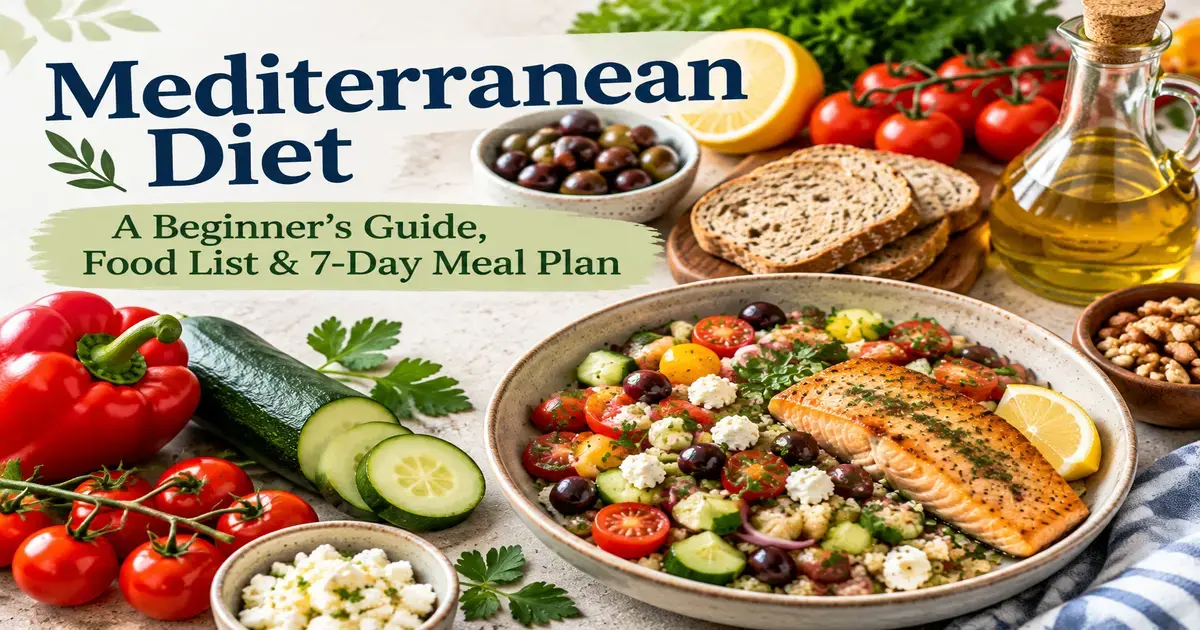
Mediterranean Diet: A Beginner’s Guide
The Mediterranean diet is a way of eating that focuses on a range of healthy foods, including vegetables, fruit, pulses, whole grains, nuts, oily fish, and olive oil. You will still get to enjoy your food, and the diet is very flexible.
This beginner’s guide will help you understand what to eat, with a simple food list, recipes, a 7-day meal plan, shopping tips, and a realistic way to begin building better eating habits.
You don’t have to change everything straight away. Small swaps can be a great way to start.
What Is the Mediterranean Diet?
The Mediterranean diet is a style of eating based on the traditional diets of countries surrounding the Mediterranean Sea. There is no one specific ‘Mediterranean diet.’
Countries such as Greece, Italy, Spain, Turkey, and North Africa all have different diets; however, they often have many similarities. They generally follow a plant-based diet high in pulses, whole grains, and unsaturated fats.
It is pretty flexible.
A Few Key Points to Note Are:
- Eat a variety of fruit and vegetables daily.
- Choose whole grains over refined grains.
- Eat pulses (beans, lentils, and chickpeas), nuts, and seeds regularly.
- Use olive oil or plant-based unsaturated oils instead of many saturated fat sources.
- Eat oily fish and seafood regularly if you enjoy it. Eat eggs, yogurts, cheese, and poultry.
- Eat red meat, processed meat, and high-added-sugar foods less frequently.
- Enjoy your food.
This eating pattern can be seen to align with heart-healthy guidelines from the American Heart Association.
The Mediterranean diet is not a low-carb diet, detox diet, or calorie-counting diet. You can still eat foods such as potatoes, rice, oats, pasta, and bread. The overall pattern is what is important.
Mediterranean Diet Food List: What to Eat and What to Limit
A good food list should make shopping easier, not leave you wondering whether every ingredient is allowed.
| Food group | Eat regularly. | Practical examples |
|---|---|---|
| Vegetables | Daily, with plenty of variety | Tomatoes, spinach, carrots, peppers, broccoli |
| Fruit | Daily | Apples, oranges, berries, bananas |
| Whole grains | Regularly | Oats, brown rice, whole-grain bread, whole-wheat pasta |
| Beans and lentils | Several times a week or more | Chickpeas, kidney beans, lentils, white beans |
| Nuts and seeds | In moderate portions | Walnuts, almonds, chia seeds, pumpkin seeds |
| Healthy fats | Use in place of less healthy fat sources | Olive oil, nuts, seeds |
| Protein foods | Vary across the week | Fish, eggs, yogurt, poultry, tofu, legumes |
| Dairy foods | According to preference and needs | Plain yogurt, milk, modest portions of cheese |
| Red and processed meat | Less often | Processed sausages, bacon, large portions of red meat |
| Sweets and sugary drinks | Less often | Cakes, sweets, soft drinks |
This is a suggestion and not a strict guideline. Frozen vegetables, canned pulses, canned tomatoes, and plain frozen fish can all be great choices. They can be cheaper and easier to shop for.
Do I Need to Use Extra Virgin Olive Oil?
Extra virgin olive oil is commonly used within this eating pattern. It is mostly unsaturated fat and can be used as an alternative to butter and other higher saturated fat oils.
You can use it in salad dressings, roasted vegetables, and simple pasta dishes. All oils are high in calories, so ensure you are having the right amount for your needs.
Do I Need to Drink Red Wine?
No. Alcohol is not required to follow this diet. If you don’t currently drink alcohol, you shouldn’t start for health reasons. However, you can follow this eating pattern without alcohol.
Mediterranean Diet Benefits
The Mediterranean diet has been widely studied. Particularly looking at cardiovascular health.
1. Helps with Heart Health
This is one of the best-researched reasons to follow this eating pattern. Studies have shown benefits to cardiovascular risk factors when following a Mediterranean diet style. Clinical trials have also shown benefits for diets high in foods such as olive oil, nuts, vegetables, and pulses.
This is likely due to the combination of foods and nutrients.
2. Can Help with Managing Blood Sugar Levels
Wholegrains, pulses, vegetables, and other high-fiber foods can be eaten to help manage blood glucose levels. Studies have shown that higher adherence to the Mediterranean-style diet can lower the risk of developing type 2 diabetes.
This does not mean you can stop taking your medication for diabetes. Those with diabetes may require tailored advice on how much carbohydrate, medication, and when to eat.
3. May Help with Weight Management
Meals based around vegetables, pulses, whole grains, and protein can be very filling and easier to follow.
However, this does not mean you will automatically lose weight. Overall, you need to think about how much calories you are having, portion sizes, activity levels, sleep, medications, and personal circumstances. Although olive oil and nuts are healthy, adding lots of them to your usual meals can increase your calorie intake.
4. Offers a Wide Range of Nutrients
Eating a variety of foods can help you get fiber, vitamins, minerals, protein, and unsaturated fats. Eating a variety of colors from vegetables, fruit, pulses, nuts, and whole grains can all help.
This can make it a great long-term option.
To learn more about the Mediterranean diet, see this review from Harvard T.H. Chan School of Public Health.
Remember that although there is evidence to show this is a good overall eating pattern, no diet can guarantee you won’t develop heart disease, diabetes, or other health conditions.
Mediterranean Diet 7 Day Meal Plan (Beginner)
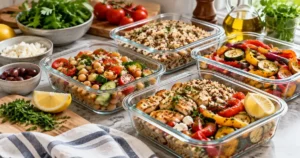
A meal plan is useful when it takes the guesswork out of everyday eating. The following example uses ordinary ingredients that are available in many supermarkets.
Portions should be adjusted to your appetite, body size, activity level, and goals. Add snacks when you need them.
| Day | Breakfast | Lunch | Dinner |
|---|---|---|---|
| Monday | Oats with plain yogurt, berries, and walnuts | Chickpea, tomato, and cucumber salad with whole-grain bread | Baked salmon, potatoes, and broccoli |
| Tuesday | Whole-grain toast with eggs and tomatoes | Lentil soup with a side salad | Chicken or tofu with brown rice and roasted vegetables |
| Wednesday | Plain Greek yogurt, banana, and oats | Leftover chicken or chickpea grain bowl | Whole-wheat pasta with tomato sauce, spinach, and white beans |
| Thursday | Overnight oats with apple and cinnamon | Tuna or white bean salad with whole-grain bread | Lentil and vegetable curry with brown rice |
| Friday | Whole-grain toast with peanut butter and fruit | Leftover lentils with chopped vegetables | Baked fish or tofu with potatoes and green beans |
| Saturday | Vegetable omelette with whole-grain toast | Hummus and roasted vegetable wrap | Chickpea and tomato stew with whole grains |
| Sunday | Yogurt with fruit, oats, and nuts | Mediterranean-style grain salad with beans and feta | Roast chicken or white beans with vegetables and potatoes. |
What About Snacks
Choose a snack that suits your hunger. Some ideas are
- An apple or orange with a few nuts.
- Plain yogurt with berries. Carrot sticks with hummus.
- Wholegrain toast with nut butter.
- Boiled egg & piece of fruit.
- You don’t have to eat snacks at certain times.
- If you are feeling nicely full from your meals, then you may not need any.
Easy Mediterranean Diet Recipes
These recipes are simple and don’t require any fancy ingredients. Start with meals that use a few simple ingredients.
1. Quick Chickpea & Tomato Salad
Ingredients: 1 tin of chickpeas, cherry tomatoes, cucumber, little red onion, lemon juice, olive oil, and chopped parsley.
Drain and rinse the chickpeas. Chop the vegetables. Add everything to a bowl and dress with lemon juice and olive oil. Add some pepper and a little feta if you like.
This can be eaten as a main or with some whole-grain bread. Leftovers can be easily turned into a lunch.
2. Overnight Oats with Fruit
Ingredients: Rolled Oats, Plain Yogurt/Milk, Berries or Chopped Apple, Small Amount of Walnuts/Seeds.
Mix the oats and yogurt/milk in a container. Place in the fridge overnight. Add fruit and nuts.
Great to have when you’re busy in the morning. Alter the amount of oats and yogurt depending on your appetite.
3. One Pan of Fish or Chickpeas with Vegetables
Ingredients: Fish Fillets/Drained Chickpeas, Potatoes, Peppers, Courgette, Olive Oil, Lemon, Garlic, and Dried Herbs.
Chop the vegetables into even-sized pieces. Toss in a little olive oil and season. Roast until almost cooked through. Add the fish and cook for the remainder of the time. Cook safely. If using chickpeas, add them in earlier so they become golden and tasty.
This is a simple meal to cook. Leftovers can be turned into a lunch.
Ways to Eat Mediterranean on a Budget
You don’t need to use imported olives, expensive fish, or any specialist items. Often the cheapest staples will be the most useful.
Shop for Affordable Items
A simple list for one person could include:
Vegetables: carrots, onions, tomatoes, cabbage, seasonal produce, and frozen mixed veg.
Fruit: Apples, bananas, oranges, or frozen berries.
Protein: Dried lentils, canned chickpeas, beans, eggs, plain yogurts, and canned fish if you eat them.
Wholegrains: Oats, brown rice, whole-grain bread, and wholewheat pasta.
Fats & Flavor: olive oil, peanuts/nuts, lemons, garlic, dried herbs.
Depending on what is cheapest locally, you can swap items around. In some countries lentils and eggs may be cheaper than fish. In others, canned sardines and frozen veggies may be better value.
Use Ingredients Twice
Cook a pot of lentils and some grains at the beginning of the week. Use them in a hot meal and then use the leftovers in a salad or bowl.
Use frozen vegetables in soups, omelets, pasta, and rice. Canned beans can be rinsed and added to salads or stews.
This can save you time and reduce food going bad in the back of your fridge.
Plan Ahead
Choose 3 or 4 meals for the evening. See what you have and only buy what you need.
You can track how much you are spending on food compared to your overall nutrition goals using this calorie calculator. If you have a specific fitness goal, you can look at this macro calculator. These are not personalized medical advice.
How to Start Following the Mediterranean Diet (30 Days)
Don’t try to change everything straight away. This can become tiring. Take it slow and find foods you enjoy.
Week 1 – More Plants
Try to add a vegetable or fruit to most meals. Add some beans to a soup, spinach to an omelet, or a fruit with breakfast.
Don’t try to cut out everything you usually eat. Just focus on adding more variety.
Week 2 – Better Everyday Staples
Start to swap some of your refined grains for whole grains. Cook some oats for breakfast, have brown rice for dinner or whole-grain bread for sandwiches.
Add some beans or lentils to 2 or 3 meals.
Week 3 – Easier Meals to Repeat
Choose 2 breakfasts, 2 lunches, and 3 dinners that you actually enjoy. Buy ingredients that you can use in a few different meals.
Try to cook a batch of grains, wash some vegetables, or make a simple dressing.
Week 4 – Create a Routine
Look back at what changes worked and keep them. If anything felt too costly, inconvenient, or restrictive, then adjust.
The aim is not to have a perfect meal plan for 30 days but to create eating habits that you can continue.
How to Personalize the Mediterranean Diet
The diet should be something that works with your preferences.
Vegetarian/Vegan
Many of the base ingredients can be found in beans, lentils, chickpeas, tofu, nuts, seeds, and whole grains. If you are fully vegan, then you should think about nutrients that may need to be fortified or supplemented. This includes vitamin B12.
Active/Building Muscle
The Mediterranean diet can help you with an active lifestyle. However, you still need enough overall calories, protein, and carbohydrates.
Ensure you have a source of protein in your meals. This can include eggs, yogurts, fish, poultry, tofu or pulses. Add some carbohydrate-rich foods such as oats, rice, potatoes, fruit and wholegrain bread.
You don’t need to cut out carbohydrates to become fitter.
Time Poor
Use easy-to-cook ingredients. Canned beans, frozen vegetables, washed greens, canned tomatoes and fast-cooking grains can all be used to create a meal that fits the pattern.
Medical Condition
Those with kidney issues, food allergies, diabetes (on glucose-lowering medication) or other conditions may have specific dietary requirements. Speak to a registered dietitian or healthcare professional for a plan that fits your circumstances.
Common Mistakes with the Mediterranean Diet
Using too much olive oil. Although it is a good source of unsaturated fats, you still need to watch your portion sizes.
Cutting out pasta and bread. Often, whole-grain options can be a great choice. You can alter the portion sizes.
Buying expensive items. Beans, lentils, oats, seasonal fruits, and frozen vegetables can help keep it affordable.
Trying to change everything. Usually, it makes more sense to create a few easy habits.
Expecting to lose weight. The diet can help with weight management; however, overall, you need to think about how much you are eating.
Thinking one item will do all the work. Using olive oil, fish, or nuts does not make the whole diet healthy.
Frequently Asked Questions About the Mediterranean Diet
Is this a good diet for beginners?
Yes! It can be a great place to start as it focuses on variety rather than a long list of foods to avoid. Start with meals you know and make a few simple changes.
Will I lose weight on the Mediterranean diet?
Yes, some people do lose weight. However, it can vary. You need to think about portion sizes, activity levels, sleep, and your personal health.
Can I follow this diet if I don’t eat fish?
Yes! You can include beans, lentils, chickpeas, nuts, seeds, eggs, tofu, and other protein sources. If you are avoiding all animal products, then you should think about nutrients such as vitamin B12.
Is this an expensive diet?
No! Dried lentils, canned beans, oats, seasonal fruits, frozen vegetables, and home-cooked meals can all help keep it affordable. Choose ingredients that are affordable locally.
Do I need to track my calories?
No. Many people can start by focusing on increasing variety, balanced meals, and portion sizes. Tracking can be useful for some fitness goals; however, it is not required.
How long will I see results?
Everyone is different. You can make changes to your eating habits quite quickly. However, changes to your weight, cholesterol, blood pressure, or blood glucose will depend on your personal circumstances. Focus on creating eating habits that you can sustain.
Next Steps with Simple Change
You don’t need a perfect fridge, complicated meal prep, or new recipes.
Pick one breakfast from the meal plan, cook a bean-based lunch, or add another vegetable to your dinner. Once these become a habit, then build from here.
Save the 7-day meal plan, create a short shopping list and choose a few meals you actually enjoy. The best way to do this will depend on your budget, time, and lifestyle.
For more practical and evidence-based health and fitness advice, check out Fit4rEver.
This article is for general information only and should not be used as a substitute for medical advice, diagnosis, or treatment. Always consult a qualified healthcare professional or registered dietitian for advice relating to your health.
