

Chair yoga for seniors is yoga done while seated in a sturdy chair. Most beginners can start with 10 minutes, three days a week, using six simple poses.
It’s gentle on the knees and hips, lowers the risk of falling compared with floor yoga, and supports flexibility and balance. It won’t replace medical treatment, and the studies so far are small.
Maybe your knees complain every time you stand up from the couch, or your balance feels a little shakier than it used to.
Maybe a doctor told you to move more, but getting down on a yoga mat sounds like a bad idea. If that’s you, chair yoga could be the most sensible place to start.
This guide covers what chair yoga is, what the research shows, and what it can and can’t do. You’ll get a safety checklist, six beginner poses with step-by-step instructions, modifications for knees, hips, backs, and balance, a free 28-day plan, and a section for family members and caregivers.
Table of Contents
- What Is Chair Yoga?
- What the Research Shows
- Is Chair Yoga Right for You?
- Does Chair Yoga Help with Weight Loss?
- Safety Checklist Before You Start
- Six Beginner Chair Yoga Poses
- Modifications for Knees, Hips, Back, and Balance
- A Free 28-Day Chair Yoga Plan
- Where to Practice: Free and Low-Cost Options
- Tips for Family Members and Caregivers
- Common Mistakes to Avoid
- Chair Exercises for Seniors: Building a Weekly Routine
- Frequently Asked Questions
- Final Thoughts
What Is Chair Yoga for Seniors?
Chair yoga is traditional yoga adapted for a seated position. The breathing, stretching, and mindful movement stay the same. What changes is your base.
Instead of balancing on your feet or lowering yourself to the floor, you use a chair for stability and support.
Chair yoga for seniors keeps the parts of yoga that help most: slow breathing, long holds, and gentle twists and forward bends that keep joints moving.
It removes the balance demands and floor transitions that stop many people from trying yoga at all.
It’s also different from general chair exercises. Chair exercises usually focus on strength through repeated movements, like seated leg lifts or light arm raises.
Chair yoga adds breath work, mindfulness, and flexibility, and it’s slower. Many people do both, which we cover later.
What the Research Shows About Chair Yoga for Seniors
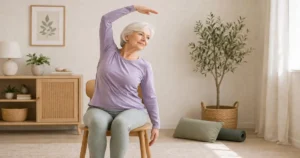
The research on chair yoga for seniors is encouraging, but most studies are small, so read the results with care.
| Study or source | Who took part? | What they did | What they found |
|---|---|---|---|
| Harvard Health summary | Older adults with knee or hip osteoarthritis | Chair yoga for 45 minutes, twice a week, for 8 weeks | Less pain and fatigue than a health education program |
| Knee osteoarthritis trial | Adults with knee osteoarthritis | 12-week chair yoga program | Better ability to carry out daily activities |
| Stress comparison | Older adults | 6 weeks of chair yoga vs. chair aerobics, walking, or social games | Greater stress reduction with chair yoga |
| 2019 study, 31 older women | Community-dwelling older women | 12 weeks of chair yoga | Better strength in hands, arms, and legs, plus balance and flexibility |
Source: Harvard Health and Healthline.
The 2019 study was small, and the researchers said more research is needed. So the honest reading is this: chair yoga looks promising for seniors, but it isn’t proven yet.
Chair yoga is a low-risk way to build habits that protect mobility. It isn’t a cure for arthritis, and it doesn’t replace medical treatment.
For broader guidance, the World Health Organization recommends that adults aged 65 and older do balance and strength training at least three days a week, alongside regular aerobic activity. Chair yoga can cover much of the balance and flexibility side. Walking and light strength work can fill in the rest.
Is Chair Yoga Right for You?
Chair yoga suits people with balance concerns, joint pain, or limited tolerance for standing. It also works well if you feel nervous about floor yoga, are recovering from illness, or haven’t exercised in a while.
Talk to a doctor first if you have:
- Back, shoulder, or hip problems
- Recent abdominal, shoulder, or hip surgery
- Heart or blood pressure concerns
Stop and get medical help right away if you feel:
- Dizzy
- Chest pain
- Shortness of breath
If you’re an adult child wondering whether chair yoga suits a parent, watch how they move day to day.
Someone who avoids stairs, grips furniture to stand, or feels sore after a short walk may benefit from a seated routine. Start the conversation gently and let them decide the pace.
Respecting their choice matters as much as the poses.
Does Chair Yoga Help with Weight Loss?
Here’s the honest answer about chair yoga for seniors and weight.
Chair yoga is movement, and movement adds up. But most sessions burn fewer calories than brisk walking or strength training, so chair yoga alone is unlikely to cause significant weight loss.
| Goal | Chair yoga’s role | What else helps? |
|---|---|---|
| Weight management | Adds gentle daily movement | Walking, light strength work, balanced meals |
| Better mood and sleep | Slow breathing and relaxation | Routine, daylight, social contact |
| Fewer sedentary hours | Quick seated breaks | Short walks between sessions |
Use the BMI calculator for a starting reference and the calorie deficit calculator to see how much energy balance gradual change would require. A doctor or registered dietitian can help you set realistic targets.
Safety Checklist Before You Start
Safety is the foundation of any seated practice. These habits are simple and make a real difference.
Choose a sturdy chair. The chair is the first thing to get right for chair yoga for seniors. Pick one without arms that doesn’t tip, wobble, roll, or slide.
A firm dining chair usually works well. If it has wheels, remove them or place the chair on a non-slip surface.
Sit well. Sit toward the front edge, but not so far forward that you feel unsteady. Keep both feet flat, roughly hip-width apart. If your feet don’t reach the floor, place a sturdy box or books under them.
Rise slowly. Pause before standing and before each new pose. Many people feel lightheaded when they change position quickly.
Take care with osteoporosis. Skip deep forward folds and forceful twists. Ask your doctor or physical therapist which movements suit your bones.
Never push into pain. Stretching should feel like relief or gentle tension. Sharp pain means stop.
The CDC’s falls prevention pages offer more ideas for making your home safer.
Six Beginner Chair Yoga Poses for Seniors

Do each pose slowly when practicing chair yoga for seniors, and repeat only as many times as feels comfortable. Coordinate movement with your breath.
| # | Pose | Main benefit | Reps or hold |
|---|---|---|---|
| 1 | Seated Mountain | Posture and body awareness | 5 slow breaths |
| 2 | Seated Side Stretch | Flexibility along the sides | 3 to 5 breaths per side |
| 3 | Seated Spinal Twist | Spine mobility | 3 breaths per side |
| 4 | Seated Eagle Arms | Shoulder and upper back stretch | 5 breaths per side |
| 5 | Seated Cat-Cow | Spine movement | 5 slow rounds |
| 6 | Seated Figure Four | Hip stretch | 3 to 5 breaths per side |
1. Seated Mountain
Sit tall with feet flat and knees over ankles. Imagine a string gently lifting the top of your head. Breathe in and draw your shoulders up and forward, then breathe out and roll them down and back. Repeat five times. It’s a good reset at the start of a session.
2. Seated Side Stretch
Breathe in and raise your right arm overhead, keeping your shoulders down. Breathe out and lean gently to the left. Hold for three to five breaths, return to center, and switch sides. Keep the movement small if your balance is uncertain.
3. Seated Spinal Twist
Sit sideways on an armless chair with one hand on each side of the backrest. Breathe in to lengthen, then breathe out and turn gently toward the chair back. Hold for three breaths and repeat on the other side. Don’t use the chair back to force the twist.
4. Seated Eagle Arms
Stretch your arms out in front of you, cross the left arm over the right at the elbows, and bring your palms together. Lift your elbows slightly and let your shoulders drop. Hold for five breaths, then switch. Your legs stay still, which is easier on the hips and lower back.
5. Seated Cat-Cow
Place your hands on your knees. Breathe in and lift your chest. Breathe out and round your back, tucking your chin. Move through five slow rounds. Skip the arch if it causes discomfort.
6. Seated Figure Four
Rest your left ankle on your right thigh and sit tall. If you feel a hip stretch, stay there. If not, lean slightly forward from the hips with your chest lifted. Hold for three to five breaths, then switch sides.
Modifications for Knees, Hips, Back, and Balance
Treat these poses as a menu for chair yoga for seniors, not a strict script.
| Concern | Adjustment |
|---|---|
| Knees | Keep feet flat, skip deep bending, and shorten the range of motion. |
| Hips | Skip the figure four and sit tall instead. |
| Lower back | Halve the twist and use only the rounding part of cat-cow. |
| Balance | Keep a sturdy table or wall within reach, and keep hands on your thighs. |
For readers over 70: Chair yoga for seniors in this age group works best when you go slower, take longer rests, and allow more recovery time between sessions. If you’ve felt dizzy when standing or changing position, mention it to your doctor before you begin. Starting with two or three poses is completely fine.
A Free 28-Day Chair Yoga Plan

Sessions are short on purpose, because consistency matters more than intensity.
| Week | Sessions per week | Length | What to practice |
|---|---|---|---|
| 1 | 3 | 10 minutes | Seated mountain, side stretch |
| 2 | 3 | 12 minutes | Add a spinal twist and eagle arms. |
| 3 | 4 | 15 minutes | Add cat-cow and figure-four. |
| 4 | 4 | 15 to 20 minutes | Full routine, plus a short walk on a non-yoga day if your doctor agrees |
Keep a simple log. Each day, rate your energy and pain from 0 to 10, and note whether standing up felt easier. Small changes show up first. You might get out of a chair without thinking, or find a stiff morning loosens sooner. Write those wins down.
Where to Practice: Free and Low-Cost Options
There are plenty of ways to find chair yoga for seniors without spending much. Here’s where to start.
| Option | Cost | Best for | Tip |
|---|---|---|---|
| Free online videos | Free | Practicing at home | Pick 10- to 20-minute routines from instructors with older-adult training |
| Public libraries | Free | Local, community-based sessions | Check the branch events calendar |
| Senior centers | Little or no cost | In-person guidance and social contact | Ask about beginner sessions |
| Community centers and senior living programs | Varies | Drop-in classes | Call ahead about visitor policies |
Before you commit to a paid class for chair yoga for seniors, ask the instructor about their experience with older adults and whether they offer modifications.
A good instructor will be glad to explain. Try one free video at home first, then move to a class once you feel ready.
Tips for Family Members and Caregivers
Many people looking up senior chair yoga are helping someone else. Here’s a hypothetical example to illustrate one approach.
A daughter, Maria, wants to help her father, who has been less active since a knee injury. She clears a space in his living room, places a sturdy armless chair on a rug, and runs a ten-minute video after breakfast.
She uses short cues like “breathe in and lift, breathe out and soften,” watches his face for strain, and stops whenever he looks uncomfortable.
Practical habits that make chair yoga for seniors easier for families:
- Use short, calm cues rather than long explanations.
- Keep the atmosphere relaxed, with no pressure to perform.
- Pause when you notice pain, fatigue, or frustration.
- Clear tripping hazards and make sure the room has good lighting.
- Practice at the same time each day so it becomes routine.
- Celebrate small wins, like a deeper breath or a steadier sit.
Common Mistakes to Avoid
Most problems with chair yoga for seniors come from a few predictable habits. Recognizing them early keeps your practice safe and enjoyable.
- Starting too fast. A 30-minute routine on day one often leads to soreness and burnout. The 28-day plan exists for this reason.
- Forcing the stretch. A gentle pull is the goal. Sharp pain means ease off.
- Using the chair back as a lever. Use it for support, not leverage.
- Skipping the pause before standing. Rest your hands on your knees, breathe, and stand slowly.
- Ignoring warning signs. If a pose causes chest pain, dizziness, or shortness of breath, stop and get help.
Chair Exercises for Seniors: Building a Weekly Routine
Chair yoga for seniors and chair exercises work well together. Yoga builds flexibility, balance, and calm, while chair exercises build strength.
| Day | Activity |
|---|---|
| Monday | Chair yoga (28-day plan) |
| Tuesday | Seated leg extensions and seated marches |
| Wednesday | Chair yoga (28-day plan) |
| Thursday | Gentle arm raises with water bottles |
| Friday | Chair yoga (28-day plan) |
| Saturday | Short walk, if your doctor says it’s safe |
| Sunday | Rest |
The right amount of activity for you should be set with your doctor. Balance and strength work matter as much as aerobic activity, so don’t skip them.
Frequently Asked Questions About Chair Yoga
How often should seniors practice chair yoga?
Three to four times a week, in short sessions, is a practical starting point. Build gradually and take rest days when you feel tired. Consistency over several weeks matters more than long single sessions.
Can chair yoga help with arthritis?
Small studies on knee osteoarthritis have reported less pain and better daily function after chair yoga programs. These results are encouraging, but chair yoga isn’t a treatment for arthritis. Talk to your doctor before starting, especially if your joints flare up.
Is chair yoga safe with osteoporosis?
It’s generally gentler than floor yoga, but avoid deep forward folds and forceful twists. Ask your doctor or physical therapist which movements suit your bones.
Do I need any equipment?
A sturdy armless chair is enough. A strap or towel can help with the shoulder stretch if you want one.
How long before I notice a difference?
The studies mentioned here ran from six to twelve weeks. Many people notice gradual changes in that time, but results vary. A simple log helps you see progress.
Can I do chair yoga if I’ve never exercised before?
Yes. Begin with two or three poses, practice for short periods, and build up as you feel comfortable.
Are chair exercises for seniors the same as chair yoga?
No. Chair exercises usually focus on strength through repeated movements. Chair yoga adds breathing, mindfulness, and flexibility. Many people use both.
Final Thoughts: Is Chair Yoga Worth Trying?
Chair yoga for seniors isn’t about flexibility records or perfect form. It’s about moving a little more comfortably each day and feeling more confident in your body. Start with two poses, build slowly, and listen to what your body tells you.
If you want more routines you can stick with, subscribe to Fit4rEver’s weekly guides. And if someone you care about could use this, share the routine with them and practice alongside them. Company makes the habit easier to keep.
🏷️ Tags: chair yoga for seniors, senior fitness, balance exercises, low-impact exercise, seated yoga
Health Disclaimer: This content is for general information only and isn’t a substitute for professional medical advice, diagnosis, or treatment. Talk to your doctor before starting any new exercise routine. Read our full disclaimer →
Sources
- Harvard Health Publishing: Chair yoga: Benefits of a mind-body practice without the risk of falling
- Healthline: Chair yoga guide
- World Health Organization: Physical activity fact sheet
- CDC: Older adult falls prevention
